
The Silent Alarm: Why Markets Should Care About Gold’s Surge, Even If Powell Doesn’t
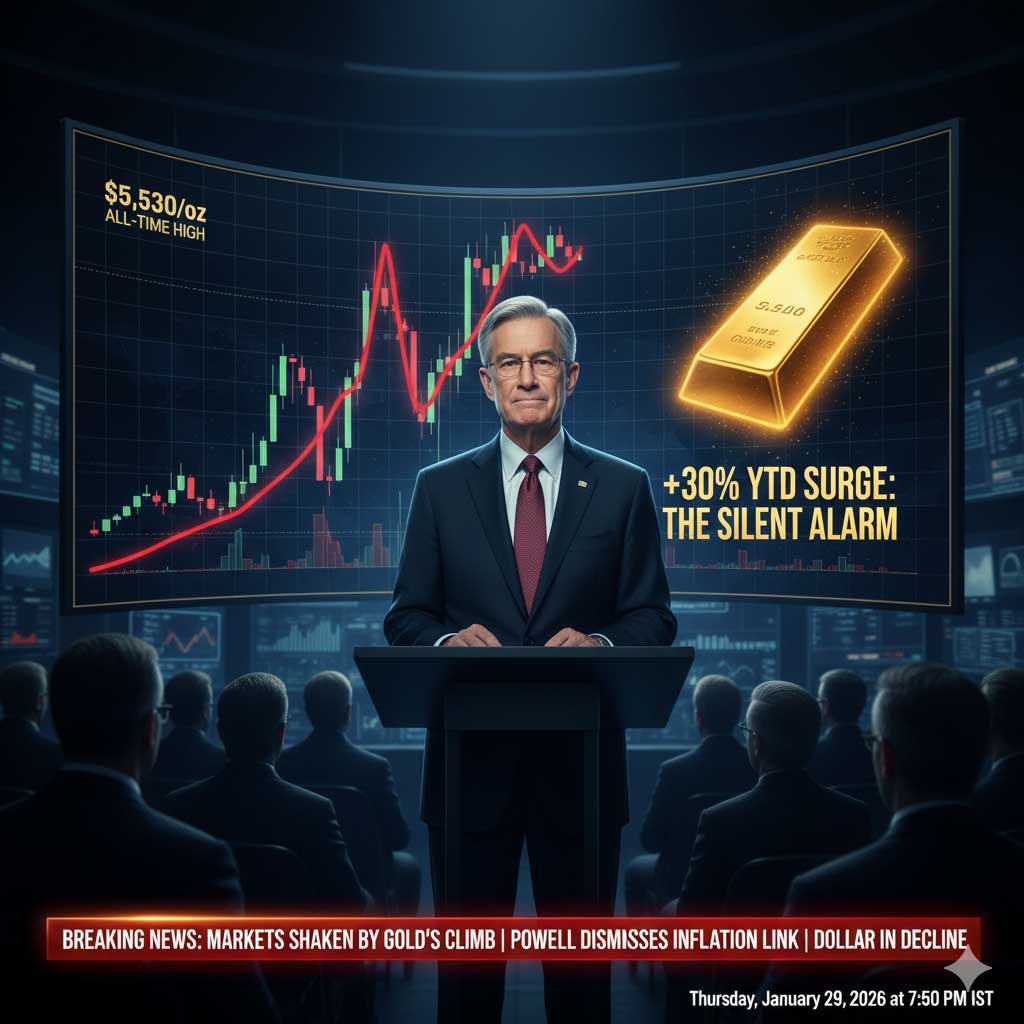
WASHINGTON, D.C. — On Wednesday, January 28, 2026, Federal Reserve Chair Jerome Powell stood before a room of reporters and did what he does best: projected a sense of calm. Despite gold prices screaming to a fresh all-time high of $5,530 per ounce that very morning—a staggering 30% jump since the start of the year—Powell remained largely unfazed.
“The central bank focuses on broader economic indicators, not individual asset movements,” Powell remarked during the post-FOMC press conference. To the Fed, gold is a “singular commodity,” a volatile asset that often moves on “market-driven narratives” rather than the core data—PCE inflation, unemployment, and consumer spending—that dictates interest rate policy.
But for the rest of the market, Powell’s dismissal might be the most dangerous signal of all. While the Fed Chair sees a “market-driven” swing, investors see a “crisis of confidence” alarm bell that is ringing louder than at any point since the 1970s.
The Great Disconnect: Powell vs. The Bullion
The tension between the Federal Reserve and the gold market boils down to a fundamental disagreement over what “inflation” actually looks like in 2026.
| Feature | The Fed’s View (Powell) | The Market’s View (Gold Surge) |
| Primary Driver | Solid economic footing and AI-driven growth. | Concerns over “monetary debasement” and debt. |
| Inflation Signal | Core PCE is the only “true” north star. | Gold is an early-warning system for a devaluing dollar. |
| Asset Role | A speculative commodity. | A “safe-haven” hedge against geopolitical instability. |
| Outlook | “Measured responses” to data. | A “breathtaking and scary” rally signal of systemic risk. |
Powell’s sanguine outlook is built on the “AI buildout,” noting that the U.S. economy remains on solid footing thanks to massive investments in data centers and productivity. However, market analysts argue that this “solid footing” is being built on a foundation of quicksand: massive deficit spending and a ballooning national debt. Why Gold is Surging: The “Perfect Storm” of 2026
Investors aren’t buying gold just because they like the color. A confluence of structural shifts has turned the precious metal into the best-performing asset of the decade.
1. The Weaponization of the Dollar
Following the 2025 tariff announcements and the freezing of foreign-currency reserves, emerging market central banks have undergone a “structural shift” in reserve management. Countries like China, Poland, and Kazakhstan are dumping U.S. Treasuries in favor of physical gold. Earlier this week, President Trump indicated he was “comfortable” with the dollar’s year-to-date softness to help bolster American exports. This sent the U.S. Dollar Index to four-year lows. To a gold investor, a “comfortable” weak dollar is a direct invitation to move into hard assets
While the Fed held rates steady at 3.50%–3.75% this week, the market is pricing in a “doom loop”—a scenario where high debt levels force the Fed to eventually cut rates even if inflation remains sticky, simply to keep the government’s interest payments manageable.
The Hidden Message Powell is Missing
By dismissing gold, Powell is essentially dismissing the “debasement trade.” This is the growing belief among institutional investors that the U.S. dollar is losing its purchasing power not because of temporary supply chain issues, but because of a permanent shift in fiscal policy.
“That sound you hear is that of 2026 gold targets being furiously revised higher,” says Chris Beauchamp, Chief Market Analyst at IG. Analysts at J.P. Morgan and Goldman Sachs are already eyeing $6,000 per ounce by the fourth quarter of 2026
If gold is a “gauge of fear,” as many traders believe, then the current 30% rally suggests the market is terrified of something the Fed isn’t even looking at.
What Happens Next?
The Fed’s “forward guidance” suggests they believe 3.5% might be the “neutral rate”—the floor for rate cuts. However, if gold continues its parabolic move toward $6,000, it may force Powell’s hand. A surging gold price often precedes a spike in consumer inflation expectations. If the public starts to believe the dollar is “trash,” they will spend it faster, creating the very inflationary spiral Powell claims is under control