
Pam Bondi Faces Anger From Lawmakers Over Handling of Epstein Files
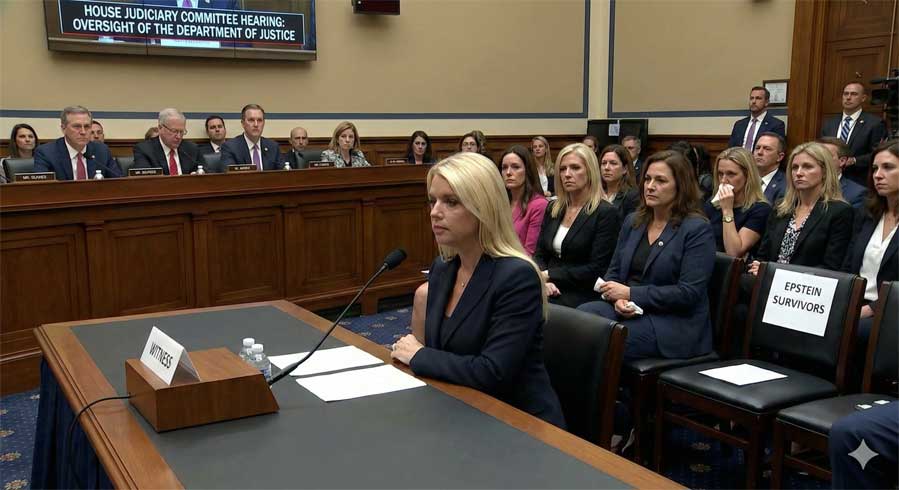
WASHINGTON — The hearing room of the House Judiciary Committee is often a theater of political conflict, but on Wednesday, the tension was palpable, thick with the weight of history and personal tragedy. Attorney General Pam Bondi, the fierce loyalist appointed by President Trump to reshape the Department of Justice, sat before a gallery that included survivors of the convicted sex offender Jeffrey Epstein.
They had come seeking accountability. They left having witnessed a defiant performance that underscored the deep, perhaps unbridgeable, chasm dividing the nation’s capital.
In a marathon four-hour session that frequently descended into shouting matches, Ms. Bondi refused to apologize for the Justice Department’s chaotic handling of the Epstein files—a release process that has been marred by delays and, most egregiously, the accidental unmasking of victims whose names were court-ordered to remain redacted. Instead of offering contrition to the women seated just rows behind her, Ms. Bondi turned her fire on her interrogators, demanding that Democrats apologize to President Trump for what she described as years of “witch hunts” and “lawfare.”
The scene encapsulated the current era of the Justice Department: aggressive, unapologetic, and inextricably bound to the will of the President. While the hearing was ostensibly called to discuss the department’s budget and oversight, the release of the Epstein documents—and the department’s simultaneous move to prosecute political opponents—dominated the proceedings.
“Siding with the Perpetrators”
Representative Jamie Raskin, the Maryland Democrat and ranking member of the panel, wasted no time in setting the tone. In a blistering opening statement, Raskin accused the Attorney General of orchestrating a “massive Epstein cover-up” designed to protect powerful figures while leaving vulnerable victims exposed to public scrutiny.
“Madam Attorney General, the world is watching, and more importantly, the women sitting behind you are watching,” Raskin said, his voice rising over the murmur of the hearing room. “You are presiding over a department that has weaponized transparency. You release names that should be hidden to humiliate victims, and you hide names that should be released to protect the powerful. You’re siding with the perpetrators, and you’re ignoring the victims. That will be your legacy, unless you act quickly to change course.”
The accusation referred to the Department’s botched data dump last month, where thousands of pages of previously sealed court documents related to Epstein’s trafficking ring were released online. Due to what the DOJ termed “clerical errors,” the names of several survivors—pseudonyms in court filings—were improperly redacted, leading to their doxing on social media. Conversely, the names of several high-profile associates of Epstein remained heavily obscured, fueling conspiracy theories and accusations of selective protection.
Ms. Bondi appeared unmoved by Raskin’s salvo. Sitting stone-faced, she waited for her turn to speak, then launched into a defense that framed the DOJ’s actions as a heroic effort to drain the swamp, dismissing the redaction errors as “regrettable technicalities” in a process she claimed was moving faster than any administration in history.
“We are cleaning up the mess left by decades of inaction,” Bondi retorted. “If you want to talk about cover-ups, let’s talk about why these files gathered dust for years under previous administrations. We are getting them out. And if there are imperfections in the process, it is because we are prioritizing speed and truth over the bureaucratic foot-dragging you prefer.”
A Refusal to Apologize
The most charged moments of the day came when Democratic lawmakers attempted to force a moment of human connection between the Attorney General and the survivors in the room. Representative Pramila Jayapal, a Democrat from Washington, paused her questioning to gesture toward the gallery.
“Ms. Bondi, sitting right there are women who were trafficked, abused, and silenced,” Jayapal said, her voice shaking with emotion. “Because of your department’s negligence, some of them have been re-victimized in recent weeks, their privacy shattered. Will you turn around, look them in the eye, and simply say, ‘I am sorry’?”
The room fell silent. Ms. Bondi did not turn around.
Staring straight ahead at the committee dais, she replied, “Congresswoman, I have the utmost sympathy for all victims of crime. But I will not participate in a piece of political theater designed to distract from the real crimes being committed against this President. If we are trading apologies, I am still waiting for this committee to apologize to Donald Trump for the years of baseless investigations that tore this country apart.”
The refusal drew gasps from the gallery and angry rebukes from Democrats. “It is not theater to ask for basic human decency,” Jayapal shot back, but Bondi had already moved on, rifling through her papers.
The exchange highlighted the extent to which the Epstein scandal has mutated. Once a bipartisan concern regarding the failure of the justice system, the files have become a partisan weapon. For Ms. Bondi and her defenders on the committee, the focus is less on the crimes of the past and more on leveraging the files to attack political enemies, all while shielding the administration from criticism regarding its operational failures.
The Retribution Agenda
While the Epstein files provided the emotional core of the hearing, the subtext was the aggressive new posture of the Justice Department under Bondi’s leadership. Her appearance came just 24 hours after the DOJ announced—and then abruptly paused—an effort to prosecute six Democratic lawmakers for “incitement” related to a video they posted criticizing President Trump’s immigration policies.
The move to indict sitting members of Congress for political speech sent shockwaves through Washington, raising fears that the “retribution” Trump promised on the campaign trail had moved from rhetoric to reality.
When pressed on the legality of such prosecutions by Representative Ted Lieu of California, Bondi was evasive but combative. She refused to cite the specific statutes violated by the lawmakers but insisted that “no one is above the law, including members of this body who incite disorder.”
“This is not prosecution, it is persecution,” Lieu argued. “You are turning the Department of Justice into the President’s personal law firm and enforcement squad.”
Bondi’s response was a chilling reflection of the new normal: “The President was elected to restore order. The Department of Justice serves the Executive, and we will enforce the laws as we see fit to ensure the stability of this nation.”
Minneapolis and the Shadow of Unrest
Adding to the volatile mix was the scrutiny over the DOJ’s intervention in Minneapolis. following a series of controversial police shootings, the Department has taken the unusual step of suing to block local police reforms, arguing they infringe on the civil rights of officers. This reversal of traditional federal oversight—where the DOJ historically investigates police misconduct—has drawn sharp criticism from civil rights groups.
Representative Ilhan Omar, whose district includes Minneapolis, grilled Bondi on the decision. “You are intervening to stop a community from healing itself,” Omar said. “You are mandating violence.”
Bondi dismissed the concerns, framing the DOJ’s intervention as a necessary measure to “stop the radical left from dismantling law enforcement.” Her answers, often mirroring President Trump’s own social media posts, suggested a Department of Justice that views local reform efforts not as laboratories of democracy, but as targets for federal suppression.
A Department Transformed
By the fourth hour, the hearing had devolved into a series of monologues. Republican members praised Bondi for her “courage” and “strength” in the face of what Representative Matt Gaetz called “the screeching of the old establishment.” They utilized their time to pivot back to the Epstein files, but with a different aim—insinuating that the “real names” being hidden belonged to Democrats, despite no evidence supporting a partisan skew in the redacted documents.
Bondi played to this sentiment, hinting darkly that “more is coming” and that the American people would be “shocked” by what her department would eventually release. It was a tease of future revelations that served to deflect from the current blunders.
As the gavel came down to end the hearing, the lasting image was not of policy debates or legal arguments. It was the visual of Attorney General Pam Bondi collecting her binders, flanked by aides, walking briskly out of the room without a single glance toward the back rows.
The survivors of Jeffrey Epstein, some holding tissues, watched her go. They had come for justice, or at least an acknowledgment of their suffering. Instead, they found themselves cast as extras in a power struggle that has consumed the capital.
“We are used to being invisible to people in power,” one survivor said to reporters in the hallway after the hearing, declining to give her name due to the recent leaks. “But to be used as a political prop and then ignored to our faces? That is a new kind of cruelty.”
For the Justice Department, the hearing confirmed a new reality. The days of distinct separation between the White House and the Attorney General are over. Under Pam Bondi, the department has become an active combatant in the culture wars, a shield for the President, and a sword against his enemies—with the collateral damage, whether it be opposition lawmakers or survivors of sex trafficking, regarded simply as the cost of doing business.
Key Takeaways from the Hearing
- Refusal to Apologize: Attorney General Bondi explicitly rejected requests to apologize to Epstein survivors for the accidental release of their names, pivoting instead to grievances regarding the treatment of President Trump.
- The “Cover-Up” Allegation: Democrats, led by Rep. Jamie Raskin, framed the DOJ’s handling of the files as a deliberate attempt to protect politically convenient figures while exposing victims.
- Political Prosecutions: The hearing confirmed the DOJ’s aggressive stance on prosecuting political speech, with Bondi defending the attempted indictment of six Democratic lawmakers.
- Minneapolis Intervention: Bondi defended the DOJ’s move to block local police reforms, signaling a federal effort to protect police immunity over civil rights concerns.
- The New DOJ: The hearing solidified the image of the Justice Department as a direct extension of the President’s political will, prioritizing loyalty and retribution over traditional norms of independence.