
JP Morgan Chase Deploys Digital Monitoring to Track Junior Banker Hours: A New Era of Workplace Transparency or Digital Surveillance?
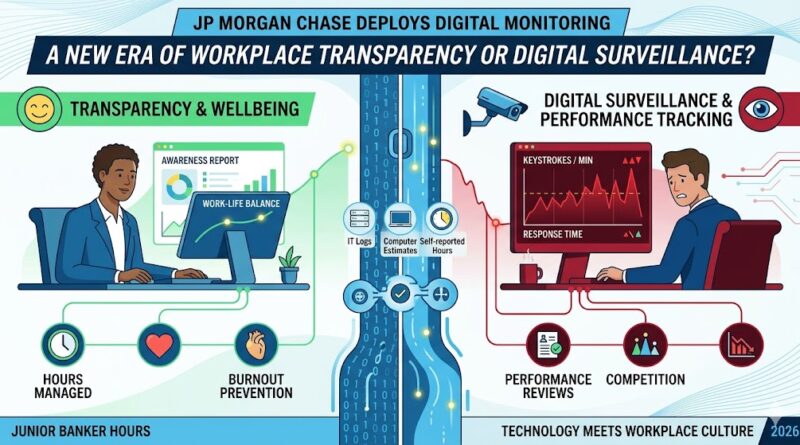
NEW YORK — In a move that has sent ripples through the high-stakes world of investment banking, JP Morgan Chase has officially launched a pilot program that utilizes computer-generated estimates to monitor the hours worked by its junior bankers. The Wall Street giant confirmed that it is now comparing self-reported timesheets against digital activity logs—including keystrokes, video call durations, and meeting schedules—to create a “comprehensive” picture of the work week.
While the bank insists the tool is designed for “awareness, not enforcement,” the development has sparked an intense debate over the boundary between employee wellbeing and intrusive digital surveillance in the professional services sector.
The Digital “Mirror”: How the System Works
The program, which is currently being trialed among a subset of the investment banking division before a planned wider rollout, operates by synthesizing data from the bank’s internal IT infrastructure. According to internal memos and company statements, the “computer estimates” are derived from several key metrics:
- Weekly Digital Activity: Tracking when a user is active on the corporate network.
- Keystroke Monitoring: Analyzing desktop activity to verify active work periods.
- Communication Logs: Factoring in the duration and frequency of Zoom, Microsoft Teams, and internal video calls.
- Calendar Synchronization: Comparing scheduled meetings against actual time spent online.
JP Morgan Chase has compared the resulting reports to the “screen time” summaries found on modern smartphones. The bank’s official stance is that these reports provide a mirror for junior employees—analysts and associates often known for working 80-to-100-hour weeks—to better understand their own output and for managers to identify teams that may be chronically overstretched.
“This tool is about awareness, not enforcement,” the bank stated. “It’s designed to support transparency, wellbeing, and encourage open conversations about workload.”
The Catalyst: Mental Health and the 80-Hour Cap
The shift toward automated monitoring comes at a time of reckoning for the banking industry. Over the past two years, several high-profile incidents involving the mental and physical collapse of junior staffers have forced Wall Street’s hand.
In late 2024 and throughout 2025, many major firms, including JP Morgan, implemented “hard caps” on junior banker hours (typically around 80 hours per week) and mandated “protected weekends.” However, the culture of “first-in, last-out” is deeply embedded in finance. Critics have long argued that junior bankers often under-report their hours on official timesheets to appear more efficient or to avoid “flagging” their seniors for violating labor caps.
By introducing computer-generated estimates, JP Morgan aims to close the gap between the “official” record and the “digital” reality. If a banker reports 70 hours but their computer logs show 95 hours of activity, the system is designed to trigger a conversation about efficiency, delegation, and burnout.
The Skepticism: “Awareness” vs. “Enforcement”
Despite the bank’s emphasis on “wellbeing,” the reception on the ground has been mixed. Junior bankers, speaking on condition of anonymity, expressed concerns that these digital logs will inevitably be used as a metric for performance reviews.
“They say it’s for our health, but if the computer shows I’m slower than my peer at completing a pitch book because my ‘keystroke density’ is lower, how is that not enforcement?” said one Manhattan-based associate.
Privacy advocates also point out the “slippery slope” of workplace monitoring. While tracking hours to prevent overwork is a noble goal on the surface, the infrastructure required to do so—tracking every click and call—creates a permanent record of an employee’s every move. In an industry where competition is fierce, the pressure to “game” the digital monitor could lead to even more stress, rather than less.
A Growing Trend in the 2026 Labor Market
JP Morgan is not alone in its pivot toward data-driven management. As we move further into 2026, “People Analytics” has become a multi-billion dollar sub-sector of the HR industry. Firms are increasingly moving away from subjective manager appraisals toward “objective” data points.
However, the banking sector remains the ultimate litmus test. The tension between the traditional “grind” of investment banking and the modern emphasis on mental health is at an all-time high. If JP Morgan’s pilot is successful in reducing burnout without damaging productivity, it could become the blueprint for the entire “Bulge Bracket” of global banks.
Looking Ahead: The Future of the Investment Bank
For now, the reports remain a pilot. The bank has promised to solicit feedback from participants before moving to a global rollout. The ultimate success of the program will likely depend on how “open” those “open conversations” actually are.
If the data is used to hire more staff and reallocate workloads, JP Morgan may indeed solve the burnout crisis that has plagued the industry for decades. If the data is used to weed out those who can’t keep up with the digital “pace,” it may simply be the latest evolution of the Wall Street pressure cooker.
Best Auto Insurance for Towing and Roadside Assistance USA
Frequently Asked Questions (FAQ)
1. What is the goal of JP Morgan’s new monitoring pilot?
The bank states the tool is designed for “awareness, not enforcement.” It aims to promote employee wellbeing and transparency by helping managers identify teams at risk of burnout and ensuring compliance with the 80-hour workweek cap.
2. What specific data does the “computer estimate” track?
The system creates a “digital footprint” by monitoring:
- Keystrokes: Active typing and desktop activity.
- Video Calls: Duration and frequency of Zoom or Microsoft Teams meetings.
- Calendar Logs: Scheduled vs. actual time spent in meetings.
- System Activity: When employees are logged into the corporate network.
3. Why is this being introduced now?
The banking industry has faced intense scrutiny following reports of junior bankers working 100+ hour weeks, leading to severe health issues and, in some tragic cases, death. JP Morgan appointed a “wellbeing chief” in 2024, and this tool is the next step in verifying that hours are being kept at sustainable levels.
4. Will this data be used for performance reviews?
JP Morgan has officially stated the tool is not for “performance evaluation” or disciplinary action. However, critics and employees express concern that “digital activity” metrics could inherently influence how a banker’s efficiency is perceived.
5. How does this compare to other banks?
- Bank of America: Launched a tool in 2024 to track workloads and flag when employees exceed 80 hours.
- Goldman Sachs: Historically used internal systems to flag high activity levels and occasionally “force” breaks, though they have relied heavily on self-reporting.
Reference Links & Sources
To stay updated on this developing story or to verify the details of the 2026 pilot program, you can refer to the following sources:
- The Guardian: JP Morgan Chase to use computer estimates to monitor hours worked by junior bankers (Published March 20, 2026)
- Bloomberg Markets: JPMorgan Starts Program to Track Junior Banker Hours (Video report on the pilot scheme)
- FinTech Magazine: How Bossware in Banking is Tracking Finance Talent Health (Analysis of “Bossware” trends in 2026)
- Investing.com: JPMorgan to track junior bankers’ hours with computer monitoring (Financial impact and corporate statements)
- HR Digest: JPMorgan’s Monitoring System Will Now Double Check Employee Working Hours (Workplace culture and HR implications)