
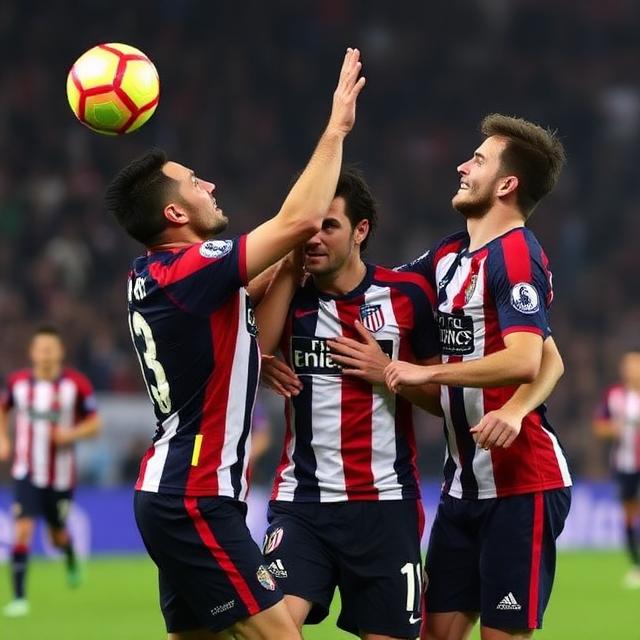
Koke Breaks the Deadlock as Atlético Madrid Hold Narrow Lead Over Valencia at the Metropolitano
Atlético Madrid went into halftime holding a slim 1–0 advantage over Valencia in a tightly contested LaLiga EA Sports clash at the Riyadh Air Metropolitano, thanks to a first-half strike from captain Koke Resurrección. It was a match defined more by intensity and tactical nuance than attacking brilliance, with both sides creating chances and leaving the outcome finely balanced heading into the second half.
The goal, scored in the 17th minute, proved decisive in a first half where Atlético struggled to fully impose themselves, while Valencia showed courage, structure, and attacking intent despite trailing at the break.
A Fast Start and an Early Warning for Atlético
The match began at a frantic pace, with Valencia immediately signaling their intentions. Just 20 seconds into the game, striker Hugo Duro came agonizingly close to opening the scoring, catching Atlético’s defense off guard and forcing an urgent response from the home side.
That early scare set the tone for a physically demanding first half. Valencia pressed aggressively, moved the ball quickly through midfield, and sought to exploit spaces behind Atlético’s wing-backs. Atlético, meanwhile, looked slightly leg-heavy, perhaps still feeling the effects of their recent Champions League encounter against PSV, as noted by several observers.
Despite the visitors’ energetic start, Atlético gradually steadied themselves, relying on experience and positional discipline to regain control of key areas of the pitch.
Koke’s Timely Intervention
In a half short on clear dominance, Koke delivered when it mattered most. The Atlético captain arrived perfectly from midfield to finish a well-worked move in the 17th minute, giving the hosts a crucial lead.
The goal exemplified Koke’s intelligence and leadership. Rather than remaining static, he timed his run from deep, catching Valencia’s defensive line off balance. It was a reminder of his importance—not just as a midfielder, but as the emotional and tactical compass of Diego Simeone’s side.
Though Atlético took the lead, the goal did not trigger sustained pressure. Instead, the match settled into a rhythm of alternating spells, with neither team able to fully dominate proceedings.
Julián Álvarez and Sorloth: A Flexible Attacking Partnership
One of the most intriguing tactical elements of the first half was how Julián Álvarez operated alongside Alexander Sorloth in Atlético’s attack.
With Sorloth acting as a clear central reference point, Álvarez was afforded significantly more freedom. Rather than playing as a fixed striker, the Argentine dropped deeper, drifted into wide areas, and frequently positioned himself on the left side, combining with Nico at varying heights.
Álvarez’s role was fluid and adaptive. He often came short to receive the ball, attempting to link midfield and attack, while Sorloth occupied Valencia’s center-backs and created space. However, despite the tactical promise, neither forward managed to be consistently decisive in the final third during the opening 45 minutes.
Sorloth did have two notable chances to extend Atlético’s lead, but lacked the finishing touch, while Álvarez remained active but unable to deliver a defining moment before halftime.
Valencia’s Response and a Disallowed Equalizer
Valencia showed resilience after conceding and refused to retreat into a defensive shell. Hugo Duro continued to threaten, and the visitors found success attacking down the flanks, particularly through Jesús Vázquez, who was among Valencia’s standout performers.
The visitors thought they had found an equalizer when Pepelu finished a promising move, but celebrations were cut short after a VAR review ruled the goal out for offside in the buildup. The decision preserved Atlético’s lead but did little to diminish Valencia’s confidence.
Despite the setback, Valencia maintained their composure, continuing to move the ball efficiently and create dangerous situations, particularly in transition.
Jesús Vázquez Shines for Valencia
Among Valencia’s players, Jesús Vázquez stood out for his physicality and consistency. The defender, born in Mérida, delivered an impressive performance on both sides of the ball.
Offensively, Vázquez was crucial in generating numerical superiority, overlapping with intent and supporting attacks from wide areas. Defensively, he was equally reliable, providing timely cover and winning key duels.
His performance epitomized Valencia’s approach: aggressive, disciplined, and unafraid to challenge Atlético in their own stadium.
Atlético’s First-Half Struggles
Despite leading at the break, Atlético’s first half was widely viewed as underwhelming. Beyond the goal, they struggled to sustain pressure or assert prolonged control.
Observers noted that Atlético appeared affected by their recent European fixture, with the tempo and sharpness not consistently at the level expected. While their structure remained intact, the lack of attacking fluidity raised concerns about their ability to close out the match.
As one Atlético-focused analyst summarized at halftime: the team scored and “little else,” with the Champions League effort seemingly weighing on their legs.
First-Half Statistics Tell a Balanced Story
The halftime numbers reflected a match that was far more even than the scoreline suggested:
- Possession: Atlético Madrid 43.9% – Valencia 56.1%
- Shots: Atlético 5 – Valencia 6
- Fouls committed: Atlético 8 – Valencia 3
- Fouls received: Atlético 3 – Valencia 8
- Recoveries: Atlético 32 – Valencia 27
- Yellow cards: Atlético 2 – Valencia 0
- Offsides: Atlético 0 – Valencia 1
Valencia enjoyed more of the ball and showed greater attacking initiative, while Atlético were more selective, relying on efficiency rather than volume.
Tactical Themes of the First Half
Several key tactical trends emerged before the interval:
- Midfield arrivals proved decisive, with Koke’s late run yielding the only goal.
- Asymmetrical attacking roles, as Sorloth fixed defenders and Álvarez roamed freely.
- Wide areas were critical, particularly for Valencia’s attacking progression.
- Energy management, with Atlético visibly pacing themselves after midweek European action.
- VAR intervention, which played a pivotal role in keeping Atlético ahead.
What Lies Ahead in the Second Half
With the match still finely poised, the second half promised further drama. Atlético faced the challenge of either raising their intensity to seek a second goal or managing the game carefully to protect their narrow lead.
Valencia, encouraged by their first-half performance, entered the second half believing they could take something from the match. Their ability to create chances, combined with Atlético’s lack of dominance, suggested the contest was far from settled.
Diego Simeone was expected to consider adjustments, possibly introducing fresh legs or altering the team’s pressing height to regain control. Meanwhile, Valencia coach Rubén Baraja had little reason to change a formula that had already caused problems for the hosts.
Conclusion: Advantage Atlético, But Nothing Decided
At halftime, Atlético Madrid led through Koke’s composed finish, but the overall narrative remained one of uncertainty. The hosts had taken their chance but failed to dominate, while Valencia had matched them in intensity, possession, and opportunities.
With much still to be decided, the second half loomed as a test of Atlético’s resilience and Valencia’s belief. In a match defined by fine margins, one more moment—of quality, error, or inspiration—could ultimately decide the outcome at the Metropolitano.