Farmers’ Almanack Winter Weather Forecast: Snow, Sleet, and El Niño Surprises Ahead

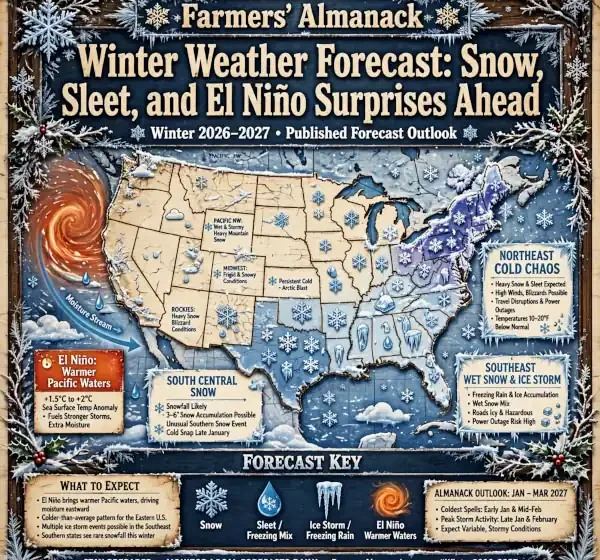
USA: The official Farmers’ Almanack winter weather forecast predicts a season of dramatic atmospheric contrasts driven by a strengthening El Niño pattern across the Pacific Ocean. Described by forecasters as a winter of “snow, sleet, and surprises,” the long-range outlook warns of an active southern storm track, volatile temperature swings in the Northeast, and rapid freeze-thaw cycles across the central United States.
2026–2027 Regional Weather Outlook
| Region | Primary Weather Outlook | Key Seasonal Highlights |
| South & Desert Southwest | Heavy Storm Track & Wet Surges | Frequent storm systems stretching from Southern California through Texas, bringing heavy downpours, sleet, and mountain snow to the southern Rockies. |
| Northeast & Mid-Atlantic | Complex & Volatile Mix | Inland areas face rounds of heavy, wet snow, while coastal corridors encounter shifting rain, sleet, and freezing rain during January and February. |
| Northern Plains & Great Lakes | Cold Waves & Snow Squalls | Fast-moving Alberta clippers, sudden cold snaps, and intense snow squalls interrupting near-average overall temperatures. |
| Pacific Northwest | Unpredictable Snowpack | Warmer and drier trends typical of El Niño, leading to less dependable mountain snowfall throughout the season. |
Key Takeaways from the Farmers’ Almanack Winter Weather Forecast
-
The El Niño Factor: Warm ocean water along the equatorial Pacific is expected to steer moisture-laden storm systems across the southern tier of the country, generating above-normal precipitation and localised icing threats.
-
Hazardous Central Freeze-Thaws: The Central U.S. and Midwest are slated for rapid shifts between thawing and freezing conditions, creating treacherous, slick road surfaces and sudden ice hazards.
-
Northeast Precision Dilemma: Minor shifts in storm tracks or boundary temperatures could mean the difference between cold rain, crippling sleet, or heavy accumulating snow in major urban centres along the I-95 corridor.
How the Forecast Is Calculated
The Farmers’ Almanack bases its long-range weather predictions on a proprietary mathematical formula originally created in 1818 by founding editor David Young. The methodology incorporates sunspot cycles, planetary alignments, lunar tides, and historical climate analogues alongside modern satellite ocean data to project trends up to 16 months in advance.