
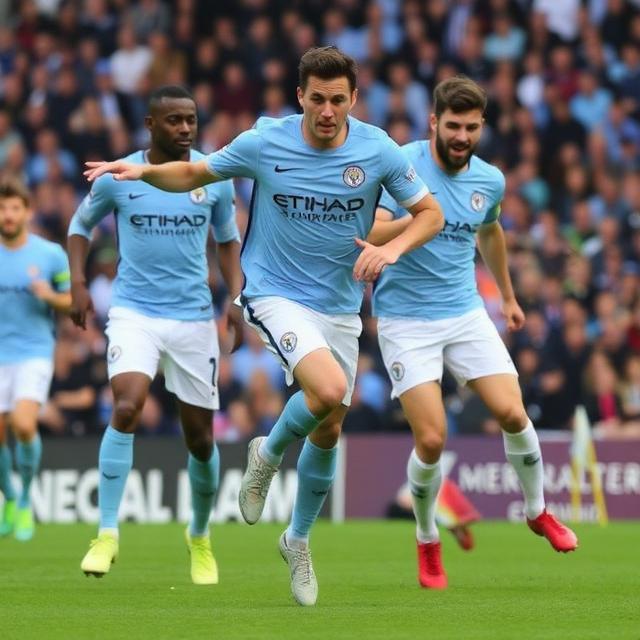
Crystal Palace 0–3 Manchester City: Glasner rues fine margins as champions show their class
Crystal Palace manager Oliver Glasner admitted that the final scoreline “felt a little bit wrong” after his side were beaten 3–0 by Manchester City, as the Premier League champions once again demonstrated their ruthless efficiency in both penalty areas.
Despite the convincing nature of the result on paper, Palace were far from overrun for large spells of the match. Instead, the contest hinged on moments of quality, composure and clinical finishing — attributes City possess in abundance and Palace, on this occasion, could not fully match.
Speaking to BBC Match of the Day, Glasner reflected on a performance he believed deserved more, even while acknowledging City’s superiority when it mattered most.
“It feels a little bit wrong [the result] but we have to accept it,” he said. “This is how big games are decided. It was small margins.”
Palace compete, City punish
From the opening whistle, Palace showed little of the deference often afforded to Pep Guardiola’s side. They pressed high, moved the ball with confidence and were willing to commit numbers forward whenever space allowed. For long periods, they matched City in intensity and occasionally unsettled the visitors’ usually assured back line.
The statistics backed up Palace’s competitiveness. They registered 16 shots over the course of the match and enjoyed spells of sustained pressure, particularly in the first half. However, while Palace were busy creating openings, City were busy converting theirs.
Glasner was candid in his assessment of where the match was ultimately decided.
“I think City were better in the boxes,” he said. “We had 16 shots and losing 3–0 is a tough moment.”
Manchester City’s superiority in both penalty areas proved decisive. Palace’s chances were often half-openings or required an extra touch, while City’s opportunities tended to be clearer, calmer and executed with precision.
Haaland shows why he is the difference
If Palace’s inability to convert their chances was one side of the story, Erling Haaland’s presence at the other end was the defining chapter. The Norwegian striker opened the scoring with a trademark header, ghosting between defenders before powering home a perfectly delivered cross.
Glasner could only admire the quality that separated the two sides.
“Great cross, great movement and great header — that is why it is Haaland and why he scores 40 goals a season,” he said.
The goal changed the complexion of the match. Palace had been competitive until that point, but falling behind against City often feels like climbing a mountain that only grows steeper with time. As Palace pushed forward in search of an equaliser, spaces inevitably opened up — spaces City exploited with devastating effect.
The second goal, arriving before Palace could fully regroup, drained belief from the home side. The third, late on, was the final blow, ensuring City left Selhurst Park with maximum points and a scoreline that reflected their clinical edge, if not the entirety of the contest.
“If we score, something could happen”
Despite the defeat, Glasner insisted there were moments when the game felt poised to swing Palace’s way.
“We had three or four big chances and we tried to get our goal and get back into the game,” he said. “It felt like if we got it something could happen.”
Those moments came and went. A shot narrowly wide, a save from City’s goalkeeper, a final pass that just failed to connect — all small details that add up over the course of 90 minutes. Against lesser opposition, such misses might be survivable. Against Manchester City, they are often fatal.
Palace’s attacking play was encouraging in structure and intent, particularly in transitions, where they moved the ball quickly and with purpose. However, the lack of a decisive finish proved costly, especially when contrasted with City’s efficiency.
A step forward despite the setback
While the scoreline was harsh, Glasner was keen to place the performance in a broader context, comparing it favourably to Palace’s recent showings in big matches.
“The performance today was better than the FA Cup final,” he said. “But we had the efficiency and City missed it.”
The comparison underlines Glasner’s belief that Palace are moving in the right direction, even if results do not always reflect that progress immediately. Under his management, Palace have shown greater tactical organisation, improved ball retention and a clearer identity in possession.
Against one of the strongest teams in world football, those developments were visible. What remains is the ability to translate promising performances into tangible outcomes — a challenge that often defines the journey of teams aspiring to close the gap on the league’s elite.
Injury concern mars the afternoon
If the defeat itself was difficult to accept, the injury to Daichi Kamada added a further layer of disappointment for Glasner and Palace supporters alike.
The midfielder, who had been one of Palace’s standout performers, was forced off after appearing to injure his hamstring in an awkward landing. Glasner confirmed the incident occurred without contact, a worrying sign when it comes to muscle injuries.
“That is the most disappointing part from this game,” he said. “He was so good with Adam Wharton today.”
The Kamada-Wharton partnership had been one of the positives of the match, offering balance, energy and creativity in midfield. Kamada’s movement between the lines caused City problems, while Wharton’s composure allowed Palace to progress the ball under pressure.
“He stretched when he landed and overstretched and the hamstring got injured,” Glasner explained. “We will assess him tomorrow.”
A potential setback for Palace’s momentum
While the full extent of Kamada’s injury will only become clear after further assessment, Glasner admitted there is concern that Palace may be without him for some time.
“It hurts because it looks like we will miss him now for a little bit longer.”
Any prolonged absence would be a blow to Palace’s hopes of building consistency, particularly given Kamada’s growing influence since his arrival. His ability to link midfield and attack has been a key part of Glasner’s tactical approach, and replacing that influence will not be straightforward.
The timing is also unfortunate, with Palace facing a demanding run of fixtures that will test the depth and resilience of the squad.
Guardiola’s City machine rolls on
For Manchester City, this was another demonstration of why they remain the benchmark in English football. Even without dominating every phase of the game, they were able to impose their quality at critical moments and manage the contest with authority once ahead.
City’s ability to absorb pressure, remain patient and strike decisively continues to set them apart. Where Palace needed multiple chances to threaten, City needed only a handful to kill the game.
Haaland’s goal tally continues to grow, reinforcing his status as the league’s most feared finisher, while the supporting cast around him provided control, creativity and defensive solidity when required.
Lessons learned, focus forward
For Glasner, the challenge now is to ensure the disappointment of this defeat becomes a learning experience rather than a lingering frustration.
“We will take our lessons from this game,” he said. “We need these games to grow and develop and progress.”
That mindset reflects a manager focused on long-term improvement rather than short-term setbacks. Facing teams like Manchester City exposes both strengths and weaknesses, offering a clear reference point for where Palace must improve if they are to compete consistently at the highest level.
The performance suggested Palace are closer than the scoreline indicates. Turning that promise into points, however, will require sharper finishing, greater concentration in defensive moments and, perhaps most importantly, the availability of key players like Kamada.
Final word
Crystal Palace’s 3–0 defeat to Manchester City will be remembered as another example of how unforgiving elite football can be. Encouraging spells, competitive statistics and positive individual performances ultimately counted for little against a side that thrives on precision and ruthlessness.
For Oliver Glasner, there was frustration, realism and cautious optimism in equal measure. Palace may have lost convincingly on the scoreboard, but the underlying performance hinted at a team still evolving — one learning hard lessons against the very best.
As Glasner made clear, the margins are small. Closing them is the task that lies ahead.
Get smarter responses, upload files and images, and more.
Log in
Sign up for free