
Behind the Label: How Language and History Shape Alto Adige’s Wine Identity
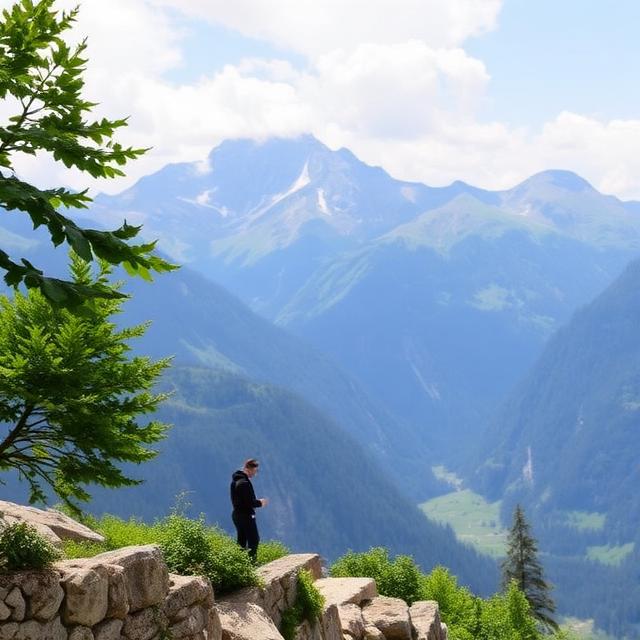
Breaking News USA : Alto Adige’s vineyards tell a story long before the cork is pulled. It is a story etched into steep alpine slopes, shaped by glacial soils, and spoken—quite literally—in more than one language. Known interchangeably as Alto Adige, Südtirol, or Trentino–Alto Adige, this northern Italian wine region sits at the crossroads of culture, politics, and identity. Few places in the global wine world wrestle so openly with the question of who they are—and how they should present themselves on a bottle label.
At first glance, the issue might appear cosmetic. After all, a grape is still a grape, whether it is called Pinot Nero, Blauburgunder, or Pinot Noir. Yet beneath these linguistic choices lies a deeper tension: how a historically divided region can project a unified wine identity to an increasingly global and commercially driven market.
A Region Shaped by History and Borders
Alto Adige’s cultural complexity is not accidental. It’s past reads like a European history textbook. Once part of the Holy Roman Empire until 1806, the region passed briefly to Bavaria before returning to Italian rule under Napoleon. Following Napoleon’s defeat, it reverted to Austrian control, remaining there for more than a century.
The 20th century proved no calmer. After World War I, Alto Adige was annexed by Italy, followed by an aggressive policy of “Italianisation” under Benito Mussolini. German-language schools were shut down, Italian names were imposed, and migration from southern Italy was encouraged. During World War II, Nazi occupation further complicated the region’s identity before a postwar agreement between Austria and Italy granted Alto Adige wide autonomy—while remaining under Italian sovereignty.
Today, that autonomy defines the region. Alto Adige has its own governing powers, particularly over education, language, and culture. The region’s cabinet is carefully structured to reflect linguistic demographics: approximately 62% of the population speaks Italian as their mother tongue, 30% German, and a small but culturally significant minority speaks Ladin, an ancient Alpine language.
This linguistic equilibrium is not just political—it permeates daily life, from road signs to school systems, and inevitably, to wine labels.
Wine at the Cultural Crossroads
Alto Adige is one of Italy’s smallest wine regions by volume, but among its most distinctive. Vineyards climb dramatic slopes at altitudes that can exceed 1,000 meters, producing wines known for precision, acidity, and aromatic purity. The region cultivates around 20 grape varieties, ranging from international grapes like Pinot Grigio and Chardonnay to local specialities such as Schiava (Vernatsch), Lagrein, and Gewürztraminer.
It is also one of Europe’s most successful agricultural regions beyond wine. Südtirol’s apple orchards account for around 15% of Europe’s apple production and approximately 2% of global supply—a statistic that underscores the region’s agricultural sophistication and export-oriented mindset.
Yet when it comes to wine branding, Alto Adige remains divided along linguistic lines.
Pinot Nero or Blauburgunder?
During a visit to the region for the biannual Alto Adige Wine Summit, the differences were immediately apparent. Bottles from some producers bore Italian grape names—Pinot Grigio, Pinot Nero, Sauvignon—while others used German equivalents such as Weissburgunder, Blauburgunder, or Sauvignon Blanc spelt with German typographic conventions.
These choices are not random. Broadly speaking, producers from Italian-speaking communities tend to label in Italian, while those from German-speaking backgrounds favour German grape names. Both approaches are legally permitted—and protected—under regional wine regulations.
According to representatives from the regional governing body, Südtirol Wein / Vini Alto Adige, this duality is intentional.
“Specifications allow and legally protect the indication of origin in both German and Italian, reflecting the historical context of our small wine-growing region,” a spokesperson explained. In practical terms, this means that DOC and IGT wines from Alto Adige may legally use either Italian or German grape names on their labels.
For exporters, a third option often comes into play: English or internationally recognised French terms. Thus, Pinot Nero may also appear as Pinot Noir for markets like the United States or the United Kingdom.
Consumer Confusion or Cultural Authenticity?
From a marketing perspective, the question is unavoidable: Does bilingual labelling confuse consumers?
In competitive export markets where shelf recognition matters, inconsistency can be risky. A consumer unfamiliar with Alto Adige might not realise that Blauburgunder and Pinot Nero are the same grape, potentially perceiving them as different styles or varieties altogether.
However, many producers argue that linguistic diversity is not a weakness, but a strength.
“Alto Adige’s identity has never been singular,” said one winemaker at the summit. “Trying to reduce it to one language would erase what makes the region authentic.”
This view is increasingly echoed by sommeliers and wine educators, who see Alto Adige as a case study in terroir-driven diversity—not just in soils and climate, but in culture.
Cantina Tramin: A Case-by-Case Strategy
Cantina Tramin, one of the region’s most internationally recognised producers, offers a pragmatic approach to the language dilemma. According to sales and marketing director Wolfgang Klotz, the winery evaluates each wine individually rather than adopting a blanket labelling policy.
“We orient ourselves by the reference commonly used for each grape variety,” Klotz explained. “Locally, for example, we say ‘Ruländer’, yet this variety has only limited relevance among local wine lovers. It is primarily appreciated abroad, which is why we refer to it as ‘Pinot Grigio’, in line with the practice of other Italian wine-growing regions.”
The opposite logic applies to Gewürztraminer—a grape synonymous with Alto Adige and internationally recognized under its German name.
“For this reason, we refrain from using the Italian designation ‘Traminer Aromatico,” Klotz said.
This flexible strategy highlights a broader reality: language on wine labels is not just about identity, but also about commerce.
A Unified Brand Without Uniformity?
Südtirol Wein has spent years promoting the region under a single umbrella brand, using both German and Italian names side by side. Promotional materials, trade fairs, and international campaigns consistently emphasise Alto Adige / Südtirol as a singular quality-driven region, regardless of linguistic variation.
The question remains whether this duality strengthens or dilutes that message.
In markets like Germany and Austria, German grape names often resonate with consumers familiar with similar terminology. In Italy, Italian labels feel more natural. In English-speaking markets, French grape names dominate regardless of origin.
Rather than forcing uniformity, Alto Adige appears to be betting on education—trusting consumers to learn, as they have with regions like Alsace, South Tyrol’s cultural cousin across the Alps.
Language as Terroir
Ultimately, Alto Adige’s labeling debate reflects a larger truth about wine: it is never just a beverage. Wine carries history, politics, geography, and identity in every bottle.
In Alto Adige, language functions almost like terroir—an invisible but influential factor shaping how wines are made, marketed, and understood. The coexistence of Italian, German, and Ladin identities is not a branding flaw but a living reflection of the region itself.
As global wine consumers become more curious and better informed, Alto Adige’s linguistic complexity may prove less of a hurdle and more of an invitation—an opportunity to engage with a region where every label tells more than one story.
In the end, whether it says Pinot Nero or Blauburgunder, the wine inside remains unmistakably Alto Adige: alpine, precise, and shaped by a history unlike any other in the wine world.
For more updates, check out the daily news alert. Have a nice day!