
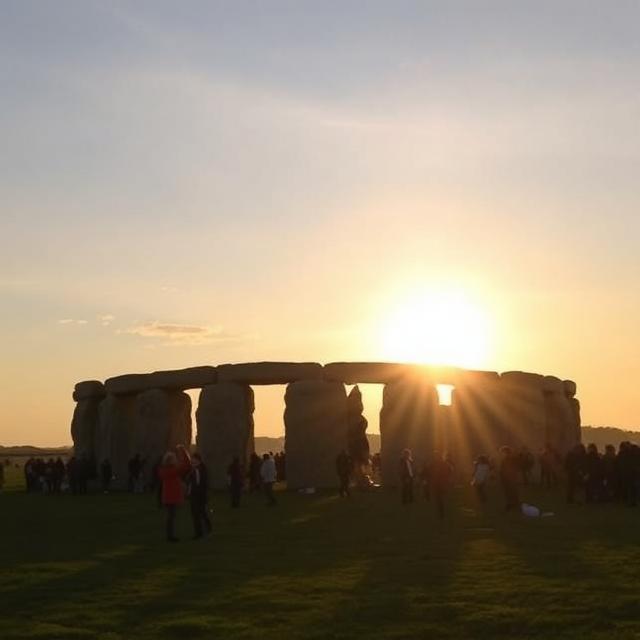
Thousands Gather as Sun Rises Over Stonehenge for Winter Solstice 2025
STONEHENGE, WILTSHIRE — In a scene that has repeated for over 4,500 years, thousands of people gathered at the prehistoric monument of Stonehenge this morning to witness the sunrise on the Winter Solstice. Amidst a crisp December air and the rhythmic beating of drums, the sun crested the horizon at approximately 8:09 AM, marking the shortest day and the longest night of the year in the Northern Hemisphere.
The event, managed by English Heritage, drew a diverse crowd ranging from modern-day Druids and Pagans in traditional robes to families and tourists who traveled hundreds of miles to experience the “rebirth of the sun.”
A Morning of Ancient Ritual and Modern Pilgrimage
Despite the freezing temperatures and the long walk from the visitor center, the atmosphere remained one of quiet reflection and collective joy. For many, the solstice is not just an astronomical event but a spiritual milestone.
- Druidic Rituals: Groups of Neo-Druids and Wiccans led chants and ceremonies within the inner circle, a rare privilege as the stones are typically roped off to the public.
- Family Traditions: One family interviewed by the BBC noted they had driven over three hours from the north of England, arriving in the pitch black of 5:00 AM to ensure they were positioned within the monument field for the first light.
- Global Reach: For those unable to make the trek to the Salisbury Plain, English Heritage provided a high-definition livestream on YouTube, allowing hundreds of thousands of viewers worldwide to watch the sun align with the ancient sarsen stones.
The Science Behind the Stones
The Winter Solstice occurs at the precise moment the Earth’s North Pole is tilted at its maximum angle—approximately 23.4∘—away from the sun. In 2025, this astronomical peak occurred at 3:03 PM GMT.
At Stonehenge, the architecture itself acts as a massive Neolithic calendar. While many associate the site with the Summer Solstice, archaeologists increasingly believe the Winter Solstice was the primary focus for its builders. The monument’s main axis is aligned with the winter solstice sunset, which would have disappeared directly between the two uprights of the Great Trilithon.
Historical Significance: Life, Death, and Feasting
For the Neolithic people of 2500 BC, the solstice was a critical turning point for survival. Excavations at the nearby settlement of Durrington Walls have revealed evidence of massive midwinter feasts.
- Slaughter of Livestock: Farmers would slaughter cattle and pigs during this time so they wouldn’t have to feed them through the scarcity of winter.
- The Turning Tide: The solstice signaled that the “dark half” of the year was ending. From this day forward, the days begin to lengthen, promising the eventual return of spring and the growing season.
- Community Gathering: Analysis of animal bones suggests that people traveled from as far as Scotland and Wales to participate in these midwinter rituals, making Stonehenge one of Europe’s first major pilgrimage sites.
Looking Ahead: The Return of the Light
As the crowds dispersed by 10:00 AM to allow the site to return to its normal operations, the sentiment among attendees was one of renewal. While today provides the least amount of daylight—just 7 hours and 49 minutes in London—the “rebirth” of the sun means that tomorrow will be slightly longer.
“The solstice reminds us that winter has a boundary,” said one attendee. “It’s the promise that no matter how dark it gets, the light always returns.”