
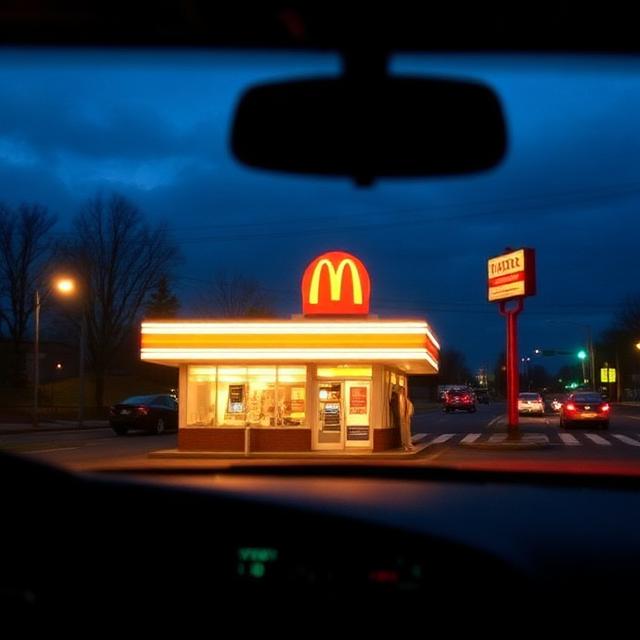
The Empty Drive-Thru: Why America’s Fast-Food Staples are Fading Into Memory
USA NEWS: For decades, the neon glow of a fast-food sign was more than just an advertisement; it was a beacon of reliability. Whether it was a midnight snack, a quick lunch between meetings, or a cheap family dinner, these establishments were woven into the fabric of daily life. However, as 2025 draws to a close, that fabric is fraying. The industry that once seemed “recession-proof” is facing a reckoning that is transforming suburban landscapes into graveyards of boarded-up windows and silent intercoms.
The most recent casualty in this shifting economic tide is Jack in the Box. With only days left in the year, the chain is racing against a self-imposed clock to shutter underperforming units. But they are far from alone. From coastal cities to the heartland, the “Golden Age” of the drive-thru is being replaced by the “Golden Age” of the financial crunch.
The Jack in the Box Collapse: A Case Study in Crisis
The news of Jack in the Box closing 72 locations this year—with dozens more expected before the New Year’s countdown—has sent shockwaves through the franchise community. For a brand with 75 years of history and over 2,200 locations, these aren’t just “operational adjustments”; they are survival tactics.
The numbers are sobering. A net loss of $80.7 million for the fiscal year and a 7.4% drop in fourth-quarter sales tell a story of a brand in retreat. CEO Lance Tucker has pointed to a strategy of simplification, but for the employees at the 47 locations shuttered in November alone, “simplification” feels a lot like extinction.
The sale of Del Taco for $119 million to Yadav Enterprises further signals a desperate need for liquidity. By offloading assets and trimming the fat, Jack in the Box is hoping to stabilize a ship that is taking on water from three specific directions: debt, declining foot traffic, and the skyrocketing cost of goods.
The Triple Threat: Why the Burgers are Getting Expensive
It isn’t just one factor killing the fast-food dream; it is a “perfect storm” of economic pressures that have made the $5 value meal a relic of the past.
1. The Beef with Prices
Agricultural inflation has hit the burger industry harder than almost any other sector. Rising beef prices, driven by drought conditions affecting cattle supply and increased logistics costs, have squeezed margins to the breaking point. When the cost of a patty doubles, a franchise owner is forced to either raise prices—risking customer “sticker shock”—or absorb the loss until the lights go out.
2. The Labor Revolution
In states like California, where Jack in the Box has a massive footprint, new wage mandates have fundamentally altered the business model. While higher wages are a victory for workers, many franchises operating on razor-thin 3% to 5% margins have found it impossible to balance the books without significantly reducing staff or closing doors entirely.
3. The Debt Trap
During the low-interest-rate years, many fast-food giants took on massive debt to fund expansions and renovations. Now, as those debts come due in a high-interest environment, companies are finding themselves “zombie brands”—earning just enough to pay the interest on their loans, but not enough to innovate or grow.
A Changing Consumer Appetite
Beyond the balance sheets, there is a cultural shift at play. The modern consumer is no longer willing to pay $15 for a “fast” meal that often lacks quality or nutritional value. With the rise of “fast-casual” competitors and the convenience of grocery store “grab-and-go” sections, the traditional burger joint is losing its grip on the American wallet.
In 2025, the “Value Menu” has become an oxymoron. As prices at the drive-thru approach the prices of sit-down casual dining, the primary incentive for fast food—its affordability—evaporates.
What Lies Ahead for 2026?
As we look toward the new year, the “cost-cutting initiatives” mentioned by CEOs like Lance Tucker are likely to become the industry standard. We are moving toward a smaller, leaner fast-food industry. This means:
- Automation over Human Interaction: Expect more kiosks and fewer cashiers.
- Smaller Footprints: The massive 50-seat dining rooms are being replaced by “digital-only” pick-up windows.
- Menu Trimming: Complex menus are being slashed to reduce food waste and speed up service.
The closures in Texas, Arizona, and California are a bellwether for the rest of the nation. The nostalgia of the 75-year-old burger joint is being weighed against the cold, hard reality of the 2025 economy. For many locations, the math simply no longer adds up.
As we watch these staples turn into memories, one thing is certain: the fast-food industry will survive, but it will never look the same again.