

CARACAS / WASHINGTON — In a stunning escalation of military force, U.S. President Donald Trump announced Saturday morning that Venezuelan President Nicolás Maduro and his wife, Cilia Flores, have been “captured and flown out of the country” following a large-scale U.S. military operation.
The pre-dawn strike, which began around 2:00 a.m. local time on January 3, 2026, involved elite units of the U.S. Army’s Delta Force and was supported by extensive airstrikes across the Venezuelan capital and surrounding regions.
High-Stakes Operation in Caracas
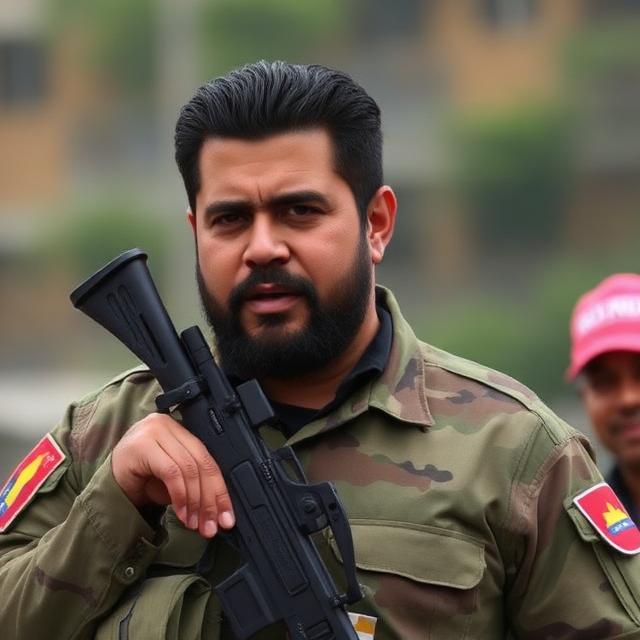
Explosions rocked Caracas as U.S. forces targeted key military installations, including the Fuerte Tiuna military complex and the La Carlota airbase. Witnesses reported low-flying aircraft and thick plumes of smoke rising over the city.
President Trump confirmed the operation in a 5:21 a.m. post on Truth Social, stating:
“The United States of America has successfully carried out a large scale strike against Venezuela and its leader, President Nicolas Maduro, who has been, along with his wife, captured and flown out of the Country. This operation was done in conjunction with US Law Enforcement.”
The capture comes exactly 35 years to the day after U.S. forces arrested Panamanian dictator Manuel Noriega on January 3, 1990.
Legal Path and Political Fallout
Secretary of State Marco Rubio reportedly informed congressional leaders that Maduro will face criminal charges in the U.S. related to a 2020 indictment for narco-terrorism and drug trafficking. Senator Mike Lee (R-UT) posted on X that Rubio “anticipates no further action in Venezuela now that Maduro is in U.S. custody.”
However, the move has drawn sharp criticism from domestic and international circles:
- Venezuela: Vice President Delcy Rodríguez confirmed Maduro’s whereabouts are unknown and demanded “proof of life,” calling the strike a “terrorist attack.”
- Russia & Iran: Both nations condemned the operation as a “flagrant violation of sovereignty” and “armed aggression,” calling for an emergency meeting of the U.N. Security Council.
- U.S. Congress: While some Republicans cheered the move, Democratic Senator Ruben Gallego called the action an “illegal war,” noting the lack of a formal declaration of war.
What Happens Next
The Trump administration has positioned the USS Gerald R. Ford and a massive naval armada in the Caribbean over recent months, signaling this operation was the culmination of a long-term “maximum pressure” strategy.
President Trump is scheduled to hold a press conference at 11:00 a.m. EST at Mar-a-Lago to provide further details on the operation and the future of the U.S. presence in the region.
FAQs: Operation Southern Spear & the Capture of Nicolás Maduro
Q: What exactly happened in Venezuela on January 3, 2026? A: In a pre-dawn military operation codenamed Operation Southern Spear, U.S. forces launched a series of “large-scale strikes” across Venezuela. President Donald Trump announced that Venezuelan President Nicolás Maduro and his wife, Cilia Flores, were captured by the U.S. Army’s Delta Force and flown out of the country. The operation included airstrikes on military targets in Caracas, such as Fort Tiuna and La Carlota airbase, as well as sites in the states of Miranda, La Guaira, and Aragua.
Q: Why did the U.S. launch this military strike? A: The Trump administration cited narco-terrorism and national security as the primary justifications. Maduro was under a long-standing 2020 U.S. indictment for drug trafficking and his government’s alleged leadership of the Cártel de Los Soles. In recent months, the U.S. had escalated a “maximum pressure” campaign, including seizing oil tankers and striking “narco boats” in the Caribbean. Officials stated the strike was executed to fulfill active arrest warrants and protect U.S. personnel.
Q: Where is Nicolás Maduro now? A: While his exact location has not been disclosed for security reasons, Secretary of State Marco Rubio confirmed that Maduro is in U.S. custody. He is expected to be transported to a federal facility to stand trial on criminal charges in the United States. Venezuelan Vice President Delcy Rodríguez has demanded “proof of life,” as the Venezuelan government remains unaware of his specific whereabouts.
Q: Who is currently leading Venezuela? A: The situation on the ground remains volatile. Under the Venezuelan constitution, Vice President Delcy Rodríguez would typically take power; however, U.S. officials have referred to the removal of the “tyrant” as a “new dawn.” Opposition leader María Corina Machado has long been viewed as a Western-backed alternative, but it is currently unclear if a transitional government has been established or if the Venezuelan military—led by Defense Minister Vladimir Padrino López—will resist the intervention.
Q: How has the international community responded? A: The reaction is deeply polarized:
- Condemnation: Russia, Iran, and Cuba have labeled the strikes “state terrorism” and a “flagrant violation of sovereignty,” calling for an emergency U.N. Security Council meeting.
- Support/Caution: The European Union stated Maduro “lacks legitimacy” but called for restraint and a peaceful transition. Several Latin American neighbors have expressed concern over regional stability.
- Domestic View: Some U.S. lawmakers, like Senator Ruben Gallego, have called the action an “illegal war” because it lacked a formal declaration from Congress.
Q: What is the significance of the date, January 3rd? A: The timing is historically symbolic. Maduro’s capture occurred exactly 35 years to the day after U.S. forces arrested Panamanian leader Manuel Noriega on January 3, 1990. Noriega, like Maduro, was a Latin American leader indicted by the U.S. on drug trafficking charges before being removed by military force.