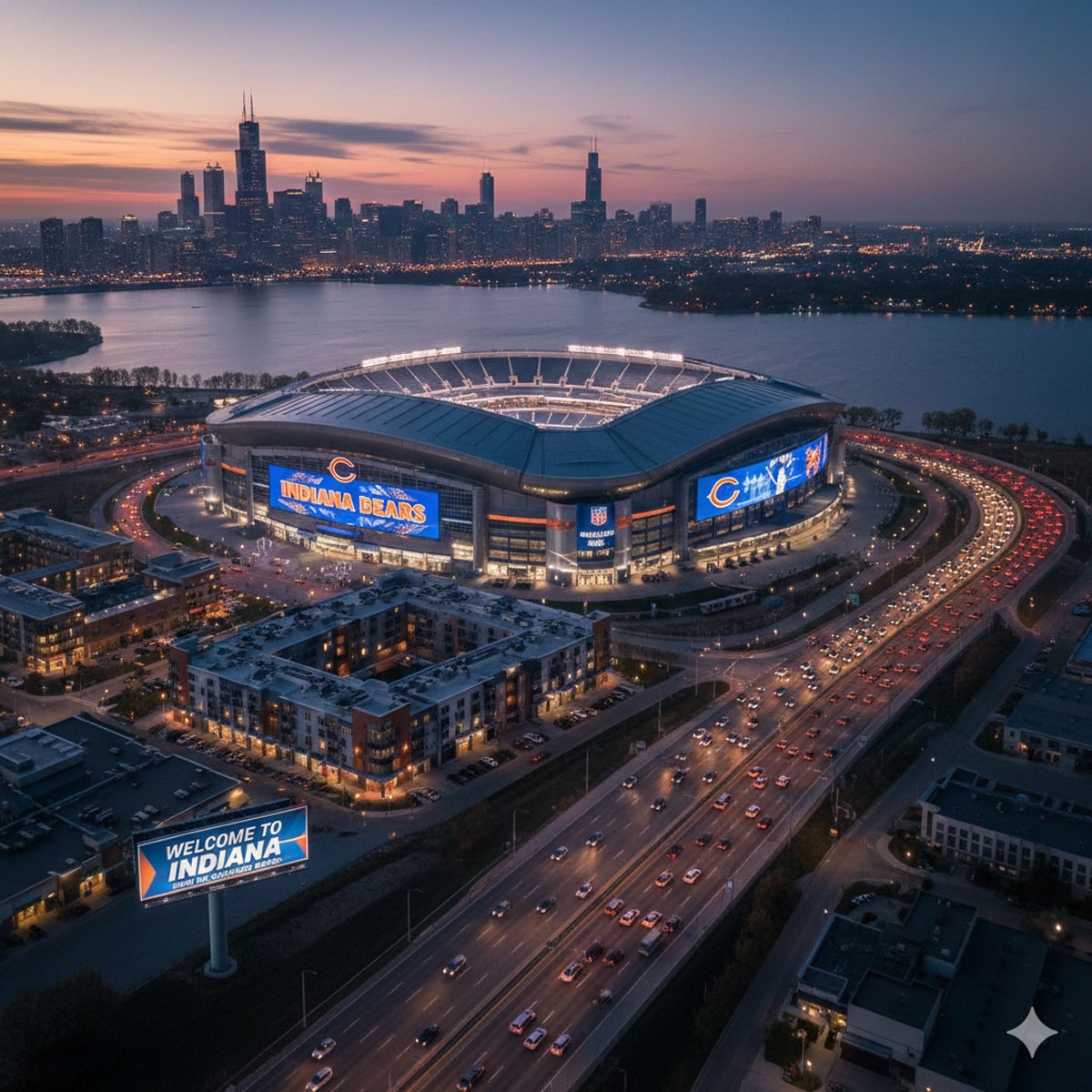

For decades, the Indianapolis Colts have stood alone as the undisputed kings of NFL football in the Hoosier State. But in a stunning series of events that has sent shockwaves from the Chicago lakefront to the statehouse in Indianapolis, that solitary reign may be coming to an end.
The Chicago Bears, one of the NFL’s most storied “Charter Member” franchises, are no longer just flirting with a move—they are actively sprinting toward the Indiana border. On Thursday, February 19, 2026, the dream of the “Indiana Bears” took its most significant step yet toward becoming a concrete reality.
The Wolf Lake Bombshell
The epicenter of this seismic shift is Wolf Lake in Hammond, Indiana. Nestled right on the Illinois-Indiana state line, this site has become the focal point of a massive, multi-billion-dollar redevelopment plan.
In a unanimous 24-0 vote, the Indiana House Ways and Means Committee passed an amended version of Senate Bill 27. This isn’t just a “feel-good” resolution; it is a legislative powerhouse that:
- Creates the Northwest Indiana Stadium Authority: A new state oversight board with the power to issue bonds and acquire land.
- Names Hammond as the official site: Specifically earmarking the Wolf Lake area for a world-class stadium.
- Locks in a $2 Billion Commitment: Chicago Bears officials confirmed they are ready to invest $2 billion of private capital into the stadium construction itself.
“The passage of SB 27 would mark the most meaningful step forward in our stadium planning efforts to date,” the Bears organization said in a formal statement. “We are committed to finishing the remaining site-specific due diligence to support our vision near the Wolf Lake area in Hammond.”
Why the Bears are Leaving Illinois in the Rearview
For over 100 years, the Bears have called Illinois home, but the relationship has hit a “goal-line stand” of political gridlock. While the Bears previously purchased the Arlington Heights racetrack site for $197 million, negotiations with Illinois lawmakers over property tax freezes and infrastructure funding have stalled for nearly two years.
In a move that caught Illinois Governor J.B. Pritzker off guard, a crucial Illinois legislative hearing scheduled for the same day as the Indiana vote was canceled at the Bears’ request. While Illinois officials expressed “disappointment,” Indiana Governor Mike Braun was busy rolling out the red carpet.
“Indiana is open for business,” Braun posted on X. “We’ve identified a promising site… and established a broad framework for negotiating a final deal.”
A Tale of Two Teams: The Colts and the (New) Bears
If this deal crosses the finish line, Indiana would join an elite group of states (including Florida, Texas, and California) that host multiple NFL franchises. But what does this mean for the Indianapolis Colts?
- Market Share: While the Colts dominate central and southern Indiana, the Bears already have a massive footprint in the “219” area code (Northwest Indiana). A stadium in Hammond would effectively turn the region into a dual-team battleground.
- Economic Engine: Hammond Mayor Tom McDermott called the project “transformational,” noting that having two global brands like the Colts and the Bears in one state would be an unprecedented economic engine for Indiana.
- The “New York” Model: Much like the New York Giants and Jets—who play in New Jersey—the “Chicago” Bears would likely keep their name, maintaining their identity while reaping the tax benefits and “speed of business” offered by Indiana.
The Financial Playbook
The proposed Hammond stadium isn’t just about football; it’s a massive infrastructure play. The funding structure currently includes:
- $2 Billion from the Bears for construction.
- $1 Billion in bonds from the new Stadium Authority.
- New Revenue Streams: A proposed 12% ticket tax on venues over 40,000 seats and a 1% food and beverage tax in Lake and Porter counties to fund infrastructure.
Is it a Done Deal?
While the momentum is firmly with the Hoosier State, there are still hurdles to clear. The bill must pass a full House vote, and the Bears must complete “site-specific due diligence”—which includes environmental testing at the lakefront site.
However, the tone has shifted. This is no longer viewed as a “leverage play” to get a better deal in Chicago. As sports business experts have noted, the Bears are acting like a team that has already mentally packed its bags.
For fans in Hammond, Gary, and across the state line, the prospect of an NFL “Battle of Indiana” between the Colts and the Bears is no longer a fantasy. It’s a first-and-goal situation.
Would you like me to look into the proposed stadium renderings or the specific impact this move might have on the Bears’ 2033 Soldier Field lease?