
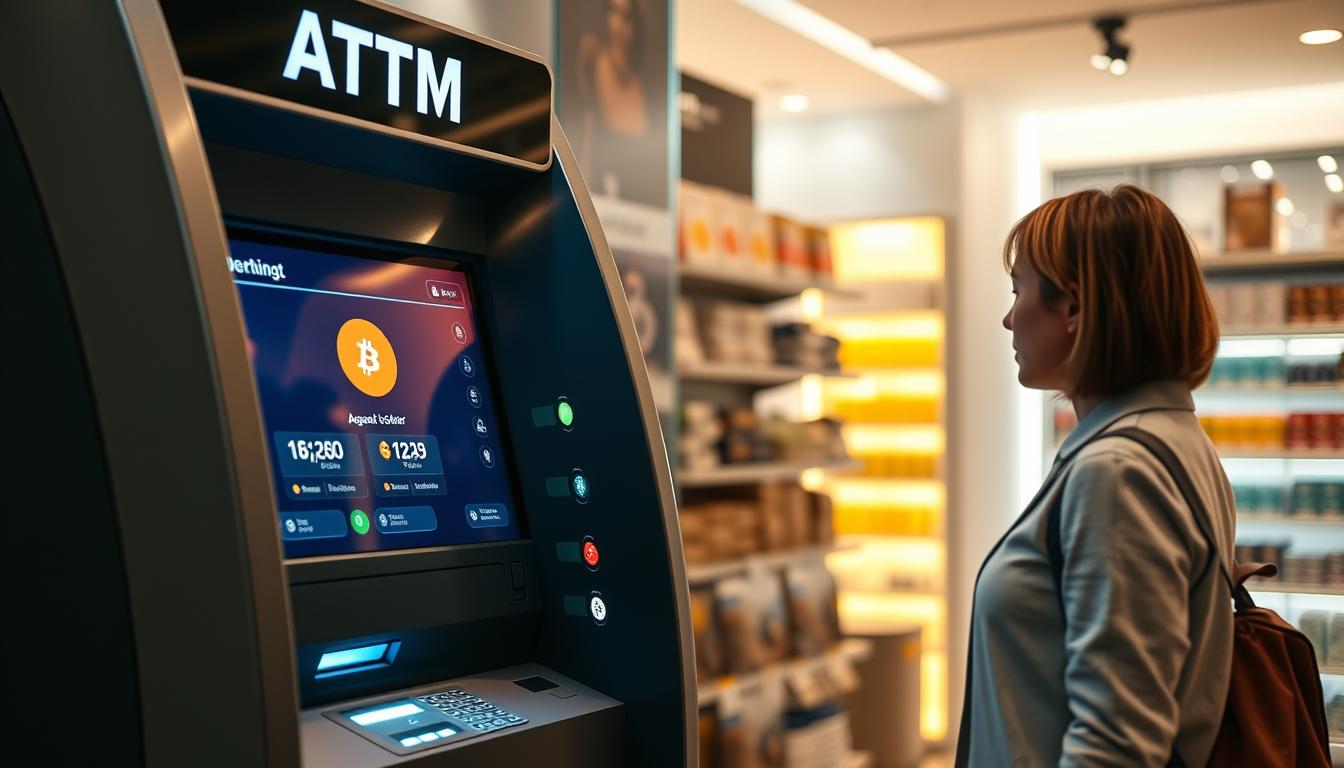
Crypto ATM Guide: Everything You Need to Know About Bitcoin ATMs
This comprehensive guide covers everything from basic operations to security considerations, helping you navigate the growing network of over 50,000 crypto ATMs worldwide with confidence.

What Are Crypto ATMs and How Do They Differ from Traditional ATMs?
A crypto ATM (sometimes called a Bitcoin ATM or BTM) is a physical kiosk that allows you to buy or sell cryptocurrency using cash. Unlike traditional bank ATMs that connect to your bank account, crypto ATMs connect to a blockchain network to facilitate cryptocurrency transactions.
Key Differences from Traditional ATMs:
- Connect to cryptocurrency exchanges instead of banks
- Require a digital wallet instead of a bank account
- Process blockchain transactions rather than traditional banking transfers
- Often have higher transaction fees (typically 7-20%)
- May require identity verification for compliance purposes

These machines are typically found in high-traffic locations like grocery stores, shopping malls, gas stations, and convenience stores, making cryptocurrency more accessible to the general public.
Ready to try a crypto ATM?
Find the nearest location to buy or sell cryptocurrency with cash today.
How Crypto ATMs Work: The Complete Process
Crypto ATMs operate through a straightforward process that connects cash transactions to the digital cryptocurrency network. Understanding this process can help make your first transaction smooth and stress-free.

Step 1: Prepare Your Digital Wallet
Before visiting a crypto ATM, you’ll need a digital wallet to receive your cryptocurrency. This can be a mobile app, hardware wallet, or paper wallet with a QR code. Most first-time users opt for a mobile wallet app for convenience.

Step 2: Visit the ATM and Verify Identity
At the machine, you’ll select whether you want to buy or sell cryptocurrency. For security and compliance reasons, you’ll typically need to verify your identity by entering your phone number and scanning a government-issued ID.

Step 3: Complete Your Transaction
For buying: Scan your wallet’s QR code, insert cash, and confirm the purchase. For selling: Send cryptocurrency to the ATM’s address and collect your cash. You’ll receive a receipt confirming your transaction.
Transaction Confirmation Times
When buying cryptocurrency, most machines credit your wallet immediately or within minutes. Selling transactions may take longer as they require blockchain confirmations, typically 10-60 minutes depending on the cryptocurrency and network congestion.

Types of Crypto ATMs: One-Way vs. Two-Way Machines
Not all crypto ATMs offer the same functionality. Understanding the different types will help you find the right machine for your needs.
One-Way Crypto ATMs

One-way machines only allow you to buy cryptocurrency with cash. These are the most common type, representing about 70% of all crypto ATMs worldwide. They’re simpler to operate and typically have lower compliance requirements.
Features:
- Cash-to-crypto transactions only
- Generally lower fees than two-way machines
- Faster transaction times
- Simpler verification process
Two-Way Crypto ATMs

Two-way machines allow both buying and selling cryptocurrency. These more advanced ATMs let you convert your digital assets back into cash, offering complete flexibility for your crypto transactions.
Features:
- Both cash-to-crypto and crypto-to-cash transactions
- Cash dispensing capability
- More rigorous identity verification
- Higher transaction limits available
| Feature | One-Way ATMs | Two-Way ATMs |
| Transaction Types | Buy crypto only | Buy and sell crypto |
| Average Fee | 7-12% | 10-20% |
| Verification Level | Basic to moderate | Moderate to extensive |
| Transaction Limits | Lower ($1,000-$3,000/day) | Higher ($3,000-$10,000/day) |
| Global Availability | More common (70%) | Less common (30%) |
Major Crypto ATM Providers and Manufacturers
The crypto ATM industry has seen significant growth, with several key players dominating the market. Understanding the major providers can help you identify reliable machines with better service and support.

Bitcoin Depot
Operating over 7,000 ATMs across the United States, Bitcoin Depot is one of the largest providers. Their machines are typically found in convenience stores and gas stations, offering a user-friendly interface for beginners.
7,000+ ATMs
US Coverage

Coinme
Partnering with Coinstar, Coinme has transformed thousands of coin-counting machines into Bitcoin-enabled kiosks. This partnership has rapidly expanded their presence in grocery stores nationwide.
10,000+ Locations
Grocery Integration

Genesis Coin
As a leading manufacturer, Genesis Coin produces the hardware for approximately 40% of all crypto ATMs globally. Their Genesis1 and Satoshi models are industry standards for reliability and security.
Manufacturer
40% Market Share

BitAccess
Known for their user-friendly software and robust security features, BitAccess machines operate in over 15 countries. Their BTMs support multiple cryptocurrencies and languages for international accessibility.
Global Presence
Multi-Currency

CoinFlip
CoinFlip operates over 3,000 ATMs across the United States, known for their 24/7 customer support and competitive exchange rates. Their machines support multiple cryptocurrencies beyond just Bitcoin.
3,000+ ATMs
24/7 Support

General Bytes
As the second-largest manufacturer, General Bytes produces about 30% of all crypto ATMs. Their BATMThree model is popular for its compact size and ability to be installed in smaller retail locations.
Manufacturer
30% Market Share
Find a reliable crypto ATM near you
Use our location finder to discover crypto ATMs from trusted providers in your area.
Geographic Distribution and Adoption Trends
Crypto ATMs have seen explosive growth worldwide, with installation numbers increasing dramatically in recent years. Understanding the global distribution can help you gauge availability in your region.

Top Countries by Crypto ATM Density
| Country | Number of ATMs | ATMs per Million People |
| United States | 34,000+ | 102.4 |
| Canada | 2,400+ | 63.5 |
| Spain | 250+ | 5.3 |
| Australia | 225+ | 8.8 |
| United Kingdom | 200+ | 3.0 |
Growth Trends and Projections

The number of crypto ATMs worldwide has grown from just 500 in 2016 to over 50,000 in 2023, representing a 100x increase in seven years. Industry analysts project continued growth, with an estimated 100,000 machines globally by 2025.
This rapid expansion reflects growing mainstream acceptance of cryptocurrency and increasing demand for physical access points to the digital economy.
Emerging Markets
While North America dominates the crypto ATM market, Latin America and Southeast Asia are seeing the fastest growth rates. Countries like El Salvador, which adopted Bitcoin as legal tender, are rapidly deploying ATMs to support their cryptocurrency initiatives.
Fees, Limits, and Transaction Costs
Crypto ATMs offer convenience, but this comes at a price. Understanding the fee structure and transaction limits will help you make informed decisions about when and how to use these machines.
Typical Fee Structure
Crypto ATM fees are significantly higher than online exchanges, typically ranging from 7% to 20% per transaction. These fees include:
- Service fee – The operator’s charge for providing the service (5-12%)
- Exchange rate margin – The difference between market rate and ATM rate (2-5%)
- Network fee – Blockchain transaction fee (varies by network congestion)
Two-way machines that allow selling cryptocurrency typically charge higher fees for cash withdrawals, often 10-20% of the transaction amount.
Transaction Limits

Limits vary by operator and jurisdiction but typically follow this pattern:
- Minimum transaction: $10-$20 (higher minimums make small purchases impractical)
- Maximum per transaction: $1,000-$3,000 without enhanced verification
- Daily limit: $3,000-$10,000 depending on verification level
- Monthly limit: $10,000-$30,000 for fully verified users
Verification Tiers and Limits
Most operators use a tiered verification system that increases your transaction limits:
- Tier 1 (Phone verification): $500-$1,000 daily limit
- Tier 2 (ID verification): $3,000-$5,000 daily limit
- Tier 3 (Enhanced verification): $5,000-$10,000+ daily limit
“While crypto ATM fees are higher than online exchanges, they offer immediate access to cryptocurrency with cash, serving an important role for the unbanked and those who value privacy or need immediate transactions.”
Security Considerations and Regulatory Compliance
Crypto ATMs operate at the intersection of digital currency and traditional finance, making security and regulatory compliance critical aspects of their operation.
Security Features

- Physical security: Tamper-proof hardware and secure mounting
- Identity verification: ID scanning, biometric verification, and SMS confirmation
- Transaction security: Encrypted connections and secure wallet generation
- Surveillance: Built-in cameras to deter fraud and record transactions
- Wallet validation: Address verification to prevent sending to incorrect wallets
Regulatory Compliance
Crypto ATM operators must comply with various regulations that vary by jurisdiction:
- KYC (Know Your Customer): Identity verification requirements
- AML (Anti-Money Laundering): Transaction monitoring and reporting
- BSA (Bank Secrecy Act): Registration as Money Service Businesses (in the US)
- CTF (Counter-Terrorism Financing): Screening against watchlists
- Transaction reporting: Reporting large transactions to financial authorities
These regulations explain why most crypto ATMs require ID verification, especially for larger transactions.
Scam Awareness
Be alert to common crypto ATM scams:
- Payment scams: Never use a crypto ATM to send money to someone claiming to be from a government agency, utility company, or tech support
- Investment scams: Beware of promises of guaranteed returns requiring crypto ATM payments
- QR code scams: Only scan QR codes displayed on the ATM screen, not from third parties
- Assistance offers: Decline help from strangers at the ATM who may attempt to manipulate your transaction
Pros and Cons of Using Crypto ATMs vs. Exchanges
Crypto ATMs offer distinct advantages and disadvantages compared to online exchanges. Understanding these differences will help you choose the right option for your needs.
Advantages of Crypto ATMs
- Cash accessibility: Direct cash-to-crypto conversion without bank accounts
- Speed: Immediate transactions without waiting for bank transfers
- Simplicity: User-friendly interface with guided process
- Privacy: Lower-value transactions may require minimal personal information
- Physical presence: Tangible access point for those uncomfortable with online-only services
- Inclusion: Serves unbanked or underbanked populations
- No technical barriers: No need to navigate complex exchange interfaces
Disadvantages of Crypto ATMs
- High fees: Significantly higher costs than online exchanges (7-20% vs 0.1-1.5%)
- Limited cryptocurrency options: Fewer available coins than online exchanges
- Lower transaction limits: Restricted amounts compared to exchanges
- Geographic limitations: Requires physical presence at machine locations
- Less price transparency: Exchange rates may not be clearly displayed
- Limited trading features: No advanced order types or trading tools
- Potential for technical issues: Machine malfunctions or connectivity problems
| Feature | Crypto ATMs | Online Exchanges |
| Transaction Fees | 7-20% | 0.1-1.5% |
| Payment Methods | Cash only | Bank transfer, credit/debit cards, other cryptos |
| Transaction Speed | Immediate | Minutes to days (depending on payment method) |
| Cryptocurrency Options | Limited (typically 5-10) | Extensive (hundreds) |
| User Experience | Simple, guided process | Can be complex for beginners |
| Bank Account Requirement | No | Usually yes |
Ready to try a crypto ATM?
Download our app to find nearby locations and get step-by-step guidance for your first transaction.
Future Outlook and Technological Developments
The crypto ATM industry continues to evolve rapidly, with several emerging trends and technological advancements shaping its future.

Enhanced Biometric Security
Future crypto ATMs are incorporating advanced biometric authentication including fingerprint scanning, facial recognition, and even palm vein scanning to improve security while streamlining the verification process.

Expanded Cryptocurrency Support
Next-generation machines are expanding beyond Bitcoin to support dozens of cryptocurrencies, including stablecoins, DeFi tokens, and even NFT transactions, making them more versatile for diverse crypto users.

Retail Integration
Crypto ATMs are increasingly integrating with retail point-of-sale systems, allowing businesses to offer crypto payment options alongside traditional payment methods in a seamless experience.
Market Projections
Industry analysts project significant growth for the crypto ATM market:
- Global market value expected to reach $3.55 billion by 2030, up from $75.01 million in 2021
- Compound Annual Growth Rate (CAGR) of 59.2% from 2022 to 2030
- Projected 100,000+ machines globally by 2025
- Increasing adoption in emerging markets across Latin America, Africa, and Southeast Asia
“As cryptocurrency adoption continues to grow globally, crypto ATMs will play a crucial role in bridging the gap between traditional finance and the digital asset ecosystem, particularly in regions with limited banking infrastructure.”

Practical Tips for First-Time Users
If you’re planning to use a crypto ATM for the first time, these practical tips will help ensure a smooth and secure experience.
Before You Visit
- Set up a digital wallet: Create and secure a cryptocurrency wallet on your smartphone before visiting the ATM
- Understand fees: Research the specific ATM operator’s fee structure to avoid surprises
- Bring proper ID: Have a government-issued photo ID ready for verification
- Check transaction limits: Verify the machine’s minimum and maximum transaction amounts
- Research location: Choose a well-lit, secure location, preferably during business hours
- Bring extra cash: Account for fees in your total amount
During Your Transaction

- Maintain privacy: Shield the screen when entering sensitive information
- Verify wallet address: Double-check the QR code scan to ensure it’s your wallet
- Confirm exchange rate: Review the conversion rate before confirming
- Keep your receipt: Save the transaction receipt for your records
- Be patient: Allow time for the transaction to process on the blockchain
Safety First: Red Flags to Watch For
Be aware of these warning signs that might indicate a scam or security risk:
- Pressure to act quickly from someone contacting you
- Requests to pay bills or fines via crypto ATM
- Strangers offering help at the machine
- QR codes provided outside the ATM interface (via email, text, or paper)
- Unusually low fees that seem too good to be true
- Machines in poorly lit or unsecured locations
Do I need a bank account to use a crypto ATM?
No, you don’t need a bank account to use a crypto ATM. These machines accept cash directly, making them accessible to unbanked individuals. You only need a digital wallet to receive your cryptocurrency.
How long does a crypto ATM transaction take?
When buying cryptocurrency, the transaction is usually processed immediately, and you’ll receive the crypto in your wallet within minutes. Selling cryptocurrency may take longer (10-60 minutes) as it requires blockchain confirmations, depending on network congestion.
Are crypto ATM transactions anonymous?
No, crypto ATM transactions are not anonymous. Due to regulatory requirements, most machines require identity verification through phone numbers, ID scanning, or biometric data, especially for transactions above minimal amounts (typically $500-$1,000).
Ready to find a crypto ATM near you?
Use our location finder to discover the closest crypto ATM and start your cryptocurrency journey today.
Conclusion: Are Crypto ATMs Right for You?
Crypto ATMs serve as important bridges between the traditional cash economy and the digital cryptocurrency ecosystem. While they come with higher fees than online exchanges, they offer unique advantages in terms of accessibility, speed, and simplicity.
For beginners looking to enter the cryptocurrency space, these machines provide a familiar and tangible way to make their first purchase. For experienced users, they offer a convenient option for quick cash-to-crypto conversions without bank transfers or waiting periods.
As the industry continues to mature, we can expect improved user experiences, lower fees through increased competition, and expanded functionality beyond basic buying and selling. Whether crypto ATMs are right for you depends on your specific needs, but understanding how they work empowers you to make informed decisions about incorporating them into your cryptocurrency strategy.
Start your crypto journey today
Download our app to find nearby crypto ATMs, create a secure wallet, and get step-by-step guidance for your transactions.