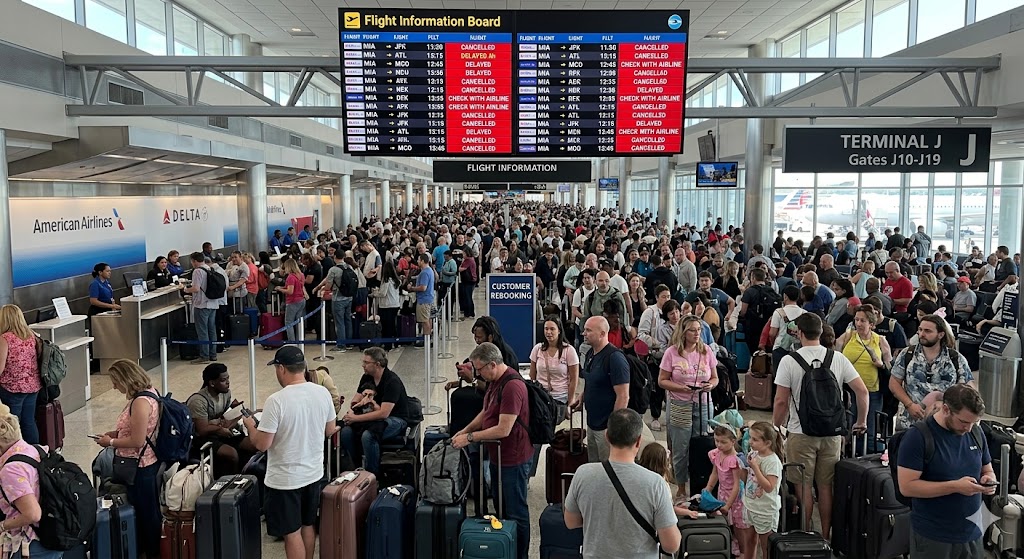

Nationwide Disruptions Peak on Easter Sunday
Easter Sunday, April 5, 2026, turned into a turbulent day for air travel across the United States, as thousands of flights were delayed or cancelled amid a combination of severe weather, staffing shortages, and peak holiday demand.
According to flight tracking data, nearly 11,000 delays and more than 500 cancellations were recorded nationwide on Sunday alone. This followed an already strained system earlier in the weekend, with over 15,000 delays on Thursday and Friday and more than 5,600 delays on Saturday.
The cumulative effect created widespread disruption, leaving travelers stranded in airports, missing connections, and scrambling for last-minute rebooking options.
Florida, one of the busiest travel destinations during the Easter holiday, experienced some of the most significant impacts, particularly at its major airports.
Florida Airports Under Pressure: MCO, MIA, and FLL
Orlando International Airport (MCO): Holiday Crowds Meet Operational Strain
Orlando International Airport (MCO), a primary gateway for tourists heading to Central Florida attractions, faced intense congestion throughout the holiday weekend.
The surge in passenger traffic coincided with flight disruptions, resulting in:
- Long security lines and crowded terminals
- Multi-hour flight delays
- Missed connections for domestic and international travelers
Families traveling for vacations were among the most affected, as delays disrupted tightly planned itineraries.
Miami International Airport (MIA): International Travel Complications
At Miami International Airport (MIA), delays were further complicated by the airport’s role as a major international hub.
Passengers flying to and from Latin America, the Caribbean, and Europe encountered:
- Delayed inbound international flights
- Longer customs and immigration processing times
- Increased risk of missed connecting flights
Because international schedules are tightly coordinated, even small disruptions had cascading effects throughout the day.
Fort Lauderdale-Hollywood International Airport (FLL): Overflow and Delays
Fort Lauderdale-Hollywood International Airport (FLL) experienced spillover pressure as airlines rerouted passengers and adjusted schedules.
The airport saw:
- Increased passenger volume due to diversions
- Gate congestion during peak hours
- Delays tied to both weather and air traffic limitations
As a secondary hub in South Florida, FLL played a crucial role in absorbing excess demand—but also felt the strain.
Weather Disruptions Trigger Nationwide Ripple Effects
Storm Systems Disrupt Key Flight Routes
Severe weather was one of the primary causes of the widespread delays and cancellations. Storm systems moving across major U.S. flight corridors brought heavy rain, thunderstorms, and strong winds.
These conditions forced air traffic control to slow operations, leading to:
- Ground delays at major airports
- Flight rerouting to avoid dangerous weather
- Reduced takeoff and landing capacity
Because aircraft operate on tightly scheduled rotations, delays in one region quickly spread across the entire network, affecting flights nationwide—including those in Florida.
Government Shutdown Impact on Airport Operations
TSA Staffing Shortages Create Bottlenecks
The ongoing partial U.S. government shutdown continued to affect airport operations during Easter weekend.
The Transportation Security Administration (TSA) experienced significant staffing shortages, with nearly 500 workers lost since the shutdown began.
Although employees resumed receiving pay after action by Donald Trump, the operational impact remained.
Passengers reported:
- Longer wait times at security checkpoints
- Slower passenger processing
- Increased stress and uncertainty before boarding
Federal Support Measures at Airports
To help mitigate staffing shortages, personnel from U.S. Immigration and Customs Enforcement were deployed to assist at select airports, including Southwest Florida International Airport (RSW).
These measures provided temporary relief but were not enough to fully stabilize operations during peak travel periods.
Policy Debate Intensifies Amid Travel Chaos
Proposal to Privatise TSA Security Operations
During the ongoing crisis, Donald Trump proposed privatising airport security operations currently handled by the TSA.
The proposal aims to reduce costs and improve efficiency, but has sparked debate among policymakers and aviation experts.
Supporters argue privatisation could streamline operations, while critics warn it may introduce inconsistencies and complicate coordination during already challenging travel periods.
Passenger Experience: Frustration and Uncertainty
Travellers Face Long Delays and Missed Plans
For passengers, the disruptions translated into real-world challenges, including:
- Overnight stays in crowded airports
- Missed family gatherings and holiday events
- Limited availability of alternative flights
Many travellers reported difficulty receiving timely updates from airlines, adding to the stress of an already difficult situation.
Airlines Struggle to Recover Operations
Airlines worked throughout the weekend to stabilise operations, but several challenges remained:
- Aircraft and crew were out of position
- Flight schedules became increasingly difficult to maintain
- Rebooking options were limited due to high demand
Even as weather conditions improved, the backlog of delays continued to impact flights into Sunday and beyond.
Economic and Travel Industry Impact
Tourism and Business Travel Affected
The disruptions had ripple effects beyond airports. Florida’s tourism industry, which relies heavily on holiday travel, faced:
- Canceled hotel bookings
- Reduced visitor spending
- Operational challenges for hospitality businesses
Business travelers also experienced delays, impacting meetings, conferences, and productivity.
What Travellers Should Know Going Forward
Tips to Navigate Ongoing Disruptions
With travel demand expected to remain high, passengers are advised to:
- Check flight status regularly before heading to the airport
- Arrive early to account for security delays
- Book flexible tickets when possible
- Consider travel insurance for added protection
Being proactive can help reduce the impact of disruptions, though some delays may be unavoidable.
Outlook: Continued Challenges Ahead
A System Under Strain
The Easter 2026 travel disruptions highlight broader challenges within the U.S. aviation system, including:
- Dependence on fully staffed federal operations
- Limited capacity to absorb weather-related disruptions
- Increasing demand for air travel
Without long-term solutions, similar disruptions could occur during future peak travel periods.
Conclusion: A Holiday Travel Warning Sign
Lessons from Easter 2026
The widespread delays and cancellations seen on Easter Sunday serve as a stark reminder of how vulnerable the air travel system can be under pressure.
A combination of severe weather, staffing shortages, and high demand created a perfect storm that disrupted travel for millions.
As airlines, government agencies, and policymakers assess the situation, the focus will shift toward preventing similar crises in the future.
For now, travelers are left navigating an uncertain landscape, where even well-planned trips can quickly be derailed by forces beyond their control.