
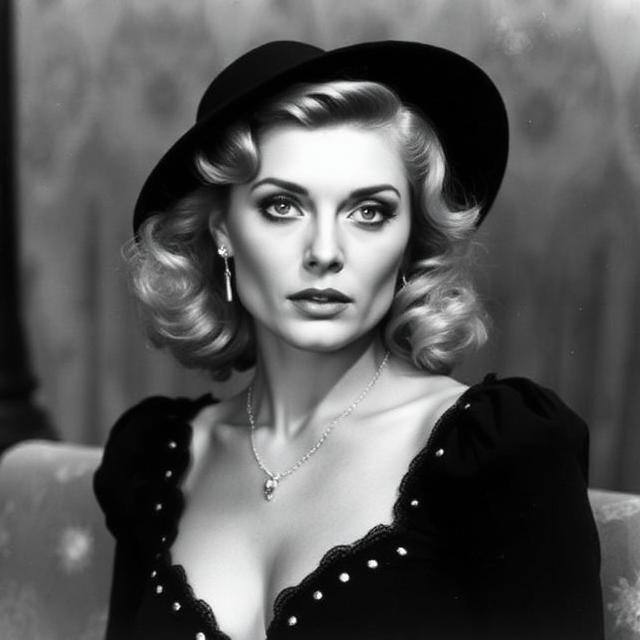
The Final Bow of a Rebel Icon: Brigitte Bardot, Screen Siren and Animal Guardian, Dies at 91
SAINT-TROPEZ, France — Brigitte Bardot, the luminous French actress who ignited a global sexual revolution in the 1950s before walking away from the “vanity” of stardom to become the world’s most fervent champion for animal rights, has died at the age of 91.
Her death was confirmed on Sunday, December 28, 2025, by the Fondation Brigitte Bardot, the organization she founded in 1986. According to foundation officials, Ms. Bardot passed away peacefully at her home, La Madrague, in Saint-Tropez—the seaside villa that she transformed from a celebrity sanctuary into a refuge for rescued animals. Though she had been hospitalized briefly in November, her passing marks the end of a singular, two-act life that saw her transition from “the world’s most beautiful woman” to its most defiant activist.
The Birth of ‘B.B.’: A Cultural Earthquake
Born into a bourgeois Parisian family on September 28, 1934, Brigitte Anne-Marie Bardot was originally a student of ballet. However, her feline grace and striking features quickly caught the eye of the fashion world. At just 15, she appeared on the cover of Elle magazine, an image that would forever change the trajectory of her life.
It was Roger Vadim, a young journalist and aspiring director, who saw in Bardot the potential for a new kind of screen presence. Unlike the polished, studio-manufactured stars of Hollywood, Bardot was raw, unapologetic, and modern. The two married in 1952, and Vadim spent the early years of her career crafting a persona that would culminate in the 1956 film And God Created Woman (Et Dieu… créa la femme).
The film was a shock to the system of mid-century morality. Playing Juliette, a young woman in Saint-Tropez who lives by her own impulses, Bardot redefined onscreen eroticism. With her “mop-top” blonde hair, barefoot stride, and defiant pout, she became an international sensation—and a target for censors. In the United States, the film was condemned by the Catholic Legion of Decency, a move that only served to fuel its massive box-office success.
The Burden of the Lens
For the next two decades, Bardot was the most photographed woman in the world. She starred in 47 films, including Jean-Luc Godard’s New Wave masterpiece Le Mépris (Contempt) in 1963 and the Western comedy Viva Maria! in 1965, which earned her a BAFTA nomination.
Yet, the fame that defined her youth was also her greatest torment. Bardot was hounded by the paparazzi in a way few stars had ever experienced. They climbed the walls of her home, followed her to the hospital during the birth of her only child, Nicolas, and relentlessly scrutinized her high-profile romances with figures like Serge Gainsbourg and Jacques Charrier.
By the early 1970s, the “B.B.” phenomenon had become a gilded cage. “I was a prisoner,” she later reflected. “The limelight ate me from the inside.”
The Radical Shift: From Cinema to Sanctuaries
In 1973, just before her 39th birthday, Bardot did the unthinkable: she retired from acting at the peak of her fame. While many expected a brief hiatus, Bardot never looked back.
“I gave my youth and my beauty to men,” she famously said. “I am now giving my wisdom and my experience to animals.”
Her second act was not a hobby; it was a crusade. She auctioned off her jewelry, her dresses, and even her most cherished mementos to fund the Brigitte Bardot Foundation. Her activism was often militant and physically demanding. In 1977, she famously traveled to the ice floes of northern Canada to protest the clubbing of baby harp seals, allowing herself to be photographed cradling a white pup—an image that galvanized a global movement.
Key Achievements of the Brigitte Bardot Foundation
- Abolition of Slaughter Practices: Successfully campaigned for “stunning before slaughter” laws in France to reduce animal suffering.
- Global Sanctuaries: Established refuges for elephants in South Africa, bears in Bulgaria, and stray dogs in Eastern Europe.
- Marine Conservation: Co-financed the MV Brigitte Bardot, a fast interceptor vessel used by the Sea Shepherd Conservation Society to combat illegal whaling.
- Fur-Free Fashion: Was a leading voice in turning the global fashion industry against the use of real fur.
A Legacy of Complexity
While her work for animals earned her the respect of millions, Bardot’s later years were marked by significant controversy. Her outspoken nature, once seen as liberating in the 1950s, took a turn toward the far-right in the 1990s and 2000s. She was fined multiple times by French courts for “inciting racial hatred” following inflammatory comments regarding Islam and immigration.
These views often complicated her public image, creating a rift between those who admired her as a feminist icon and animal savior, and those who condemned her political rhetoric. Yet, through it all, Bardot remained unbowed, living a reclusive life at La Madrague surrounded by her dogs, cats, and horses.
Final Tributes
On Sunday, tributes poured in from across the globe. French President Emmanuel Macron described her as “a monument of French culture who used her voice for those who had none.” Paul Watson, founder of Sea Shepherd, noted, “The animals have lost their greatest warrior, but her foundation will ensure the fight continues.”
Ms. Bardot is survived by her fourth husband, Bernard d’Ormale, and her son, Nicolas-Jacques Charrier. In accordance with her wishes, her foundation has asked that in lieu of flowers, donations be made to continue the protection of the animals she loved more than fame itself.