
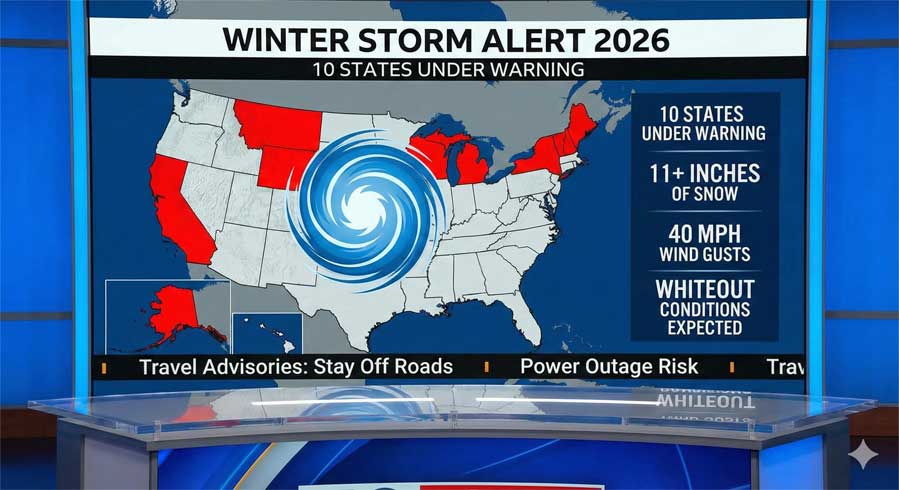
Winter Storm Alert 2026: 10 States Brace for 11 Inches of Snow, 40 MPH Winds, and Whiteout Conditions
As we move deeper into February 2026, many Americans hoping for an early spring are facing a harsh reality check. A massive winter weather system is currently sweeping across the United States, prompting the National Weather Service (NWS) to expand winter storm warnings to 10 states. From the Sierra Nevada mountains to the gloomy coast of New England, dangerous conditions—including up to 11 inches of snow, freezing rain, and 40 mph wind gusts—are disrupting travel and daily life.
If you live in New York, Michigan, Wisconsin, California, Vermont, Maine, New Hampshire, Montana, Wyoming, or Alaska, you need to be on high alert. This comprehensive guide details the storm’s path, the specific threats to your region, and crucial winter safety tips to protect your home, vehicle, and family during this severe weather event.
The Situation: A Multi-Front Winter Offensive
On Tuesday, February 10, the NWS issued bulletins confirming a complex weather scenario involving a “clipper system” and severe post-frontal flows. While one system exits the Northeast, another trails behind, bringing lake-effect snows and dangerous winds.
The forecast is severe:
- Snowfall Accumulation: Up to 11 inches in parts of New York and Alaska, with higher elevations in the West seeing up to 2 feet.
- Wind Speeds: Gusts reaching 35–40 mph, creating blizzard-like visibility and increasing the risk of power outages.
- Hazards: Freezing rain, black ice, and dense fog are making roadways treacherous.
This isn’t just a standard snowfall; it is a volatile mix of precipitation types that requires immediate preparation.
Regional Breakdown: Who is Impacted and How?
The storm is not affecting every state equally. Here is a detailed breakdown of the forecast by region so you can prepare accordingly.
1. The Northeast: The Clipper System Strikes
States Affected: New York, Vermont, New Hampshire, Maine.
A “Clipper system”—a fast-moving low-pressure system usually originating from Canada—is the primary culprit here.
- Upstate New York & New England: Expect light to moderate snowfall. However, the real danger comes from the “lake-effect” snow bands developing off Lakes Erie and Ontario.
- Binghamton & Buffalo: These areas are in the bullseye. NWS meteorologists have issued winter weather advisories predicting upwards of 11 inches of snow. The heaviest accumulation is expected to taper off by late Wednesday night, Feb 11.
- Southern New England: Residents here should prepare for a “wintry mix.” This often means a dangerous cocktail of snow, sleet, and freezing rain, which is significantly more hazardous for driving than snow alone.
2. The Midwest: Lake-Effect Snow Continues
States Affected: Wisconsin, Michigan.
As cold air rushes over the relatively warmer waters of the Great Lakes, lake-effect snow will pummel the downwind areas.
- Forecast: Up to six additional inches of snow is expected in targeted belts.
- Impact: Visibility in these snow bands can drop to zero in minutes. If you are driving near the Great Lakes, ensure your vehicle is equipped with winter tires and an emergency survival kit.
3. The West: Mountain Snow and High Winds
States Affected: California, Montana, Wyoming.
The Western states are dealing with elevation-dependent severity.
- Montana & Wyoming: The higher elevations, specifically near Cooke City and the Absaroka-Beartooth Mountains, are forecasting a massive dump of snow—up to 20 inches.
- California (Sierra Nevada): Winter storm warnings are active for the higher elevations of northern and central California. The mountains could see up to 24 inches (2 feet) of fresh powder.
- Wind Threat: The Sierra Nevada is also bracing for wind gusts of 35–40 mph. Combined with heavy snow, this creates extreme avalanche danger and whiteout conditions for mountain passes.
4. Alaska: The Deep Freeze
Locations: Anchorage, Fairbanks.
Alaska is no stranger to snow, but this system is intense even for the Last Frontier.
- Forecast: Up to 12 inches of snow.
- Conditions: Blizzard conditions are projected to last through the early morning of Wednesday, Feb 11. Residents should expect significant travel delays and potential school closures.
The Hidden Danger: Dense Fog and “Wintry Mix”
While snow grabs the headlines, the NWS has issued a specific warning regarding visibility. As the temperature fluctuates, dense fog is becoming a major killer on the roads.
“Dense fog can quickly and unexpectedly reduce visibility to a quarter mile or less. If you find yourself driving through dense fog, small decisions can make a big impact…or save you from one.” — National Weather Service
Fog Safety Tips:
- Low Beams Only: Never use high beams in fog; the light reflects off the water droplets and blinds you further.
- Increase Following Distance: Three seconds is not enough. Stretch it to five or six seconds.
- Listen: At intersections, roll down your window to listen for traffic you cannot see.
Comprehensive Winter Safety Guide
With severe weather warnings covering 20% of the United States, now is the time to review your safety protocols. Whether you are facing 11 inches of snow or icy rain, preparation is the best insurance policy.
1. Winter Driving Safety & Auto Insurance Considerations
Driving in winter storms contributes to thousands of accidents annually.
- Tires: Ensure you have adequate tread depth. If you live in a warning zone, snow tires are a high-value investment that can prevent costly accidents.
- Battery Health: Cold weather drains car batteries. If your battery is over 3 years old, get it tested.
- Emergency Kit: Every car should have a “go-bag” containing:
- Jumper cables
- Cat litter or sand (for traction)
- A shovel
- Blankets and hand warmers
- Flashlight with extra batteries
- Insurance Check: Review your auto insurance policy. Does it cover roadside assistance? Do you have comprehensive coverage for damage caused by falling branches or ice?
2. Home Protection: Preventing Ice Dams and Pipe Bursts
Heavy snow and freezing temps can wreak havoc on your property.
- Prevent Frozen Pipes: Keep your thermostat set to at least 55°F, even if you are away. Open cabinet doors under sinks to allow warm air to circulate around pipes.
- Ice Dams: If you have 11 inches of snow on your roof, you are at risk for ice dams—ridges of ice that form at the edge of a roof and prevent melting snow (water) from draining. This can cause water to leak into your home, causing thousands of dollars in damage. Use a roof rake to clear snow from the edges if safe to do so.
- Heating Systems: Ensure your furnace filters are clean. Carbon Monoxide (CO) poisoning spikes during winter storms due to improper use of generators or blocked vents. Check your CO detectors immediately.
3. Personal Health: The “Heart Attack Snow” Phenomenon
Shoveling heavy, wet snow is a leading cause of heart attacks in winter.
- Pace Yourself: Shovel for 10 minutes, then rest.
- Push, Don’t Lift: It exerts less strain on your heart and back.
- Stay Hydrated: You sweat even in the cold. Dehydration thickens the blood, increasing clot risk.
- Hypothermia Watch: Wear layers. The layer closest to your skin should be moisture-wicking (not cotton).
Financial Preparedness: Weathering the Storm Costs
Severe weather events are expensive. From increased heating bills to potential property damage, the financial toll of a winter storm can be significant.
Home Insurance Claims
If your home is damaged by the storm (e.g., wind tears off siding or a tree falls on your roof), document everything.
- Take Photos: Before you clean up, take high-resolution photos of the damage.
- Mitigate Further Damage: You are often required by insurance policies to make temporary repairs (like tarping a hole in the roof) to prevent further water damage. Keep receipts for all materials used.
Energy Efficiency
With temperatures plummeting, heating costs will soar.
- Seal Drafts: Use draft stoppers on doors and window film on drafty windows.
- Smart Thermostats: These can help regulate temperature more efficiently, saving you 10-15% on energy bills during peak winter months.
Looking Ahead: When Will It End?
There is light at the end of the tunnel. The NWS predicts that the system affecting the Northeast will quickly depart by late Wednesday, bringing an end to the precipitation for most locations. However, the cold post-frontal flow means temperatures will remain low, preserving the snowpack and keeping roads icy.
In the Southeast, the trailing cold front may bring thunderstorms through Wednesday, adding a risk of localized flooding to the mix.
Conclusion
Winter 2026 is not going down without a fight. With 10 states under warnings and millions of Americans in the path of the storm, vigilance is key. Whether you are in Buffalo facing 11 inches of snow or in California navigating high winds, respect the weather. Stay off the roads if possible, keep your devices charged, and check on elderly neighbors.
Spring is coming, but for now, keep your shovels handy and stay safe.
Disclaimer: Weather conditions change rapidly. Always check the official National Weather Service website or your local news station for the most up-to-the-minute alerts in your specific area.
Top Stories
-

Braylon Mullins Delivers Stunning Buzzer-Beater as UConn Shocks Duke in NCAA Tournament Thriller
It was supposed to be Duke’s year. After months of dominance, confidence, and consistency, the Duke Blue Devils men’s basketball
-

ITALIAN CITIZENSHIP CRACKDOWN | Millions of Americans Stripped of Second Passport Rights Under New Citizenship Rule Change in Italy: Here’s All You Need to Know
ROME / WASHINGTON, D.C. — ITALIAN CITIZENSHIP CRACKDOWN USA Breaking news today: The golden age of “unlimited” Italian citizenship by
-

IRAN WAR HORMUZ | Iran demands sovereignty over Strait of Hormuz: How will it benefit Tehran? Here’s all you need to know
TEHRAN / LAS VEGAS — In a dramatic escalation of the ongoing conflict that has paralysed global energy markets, the