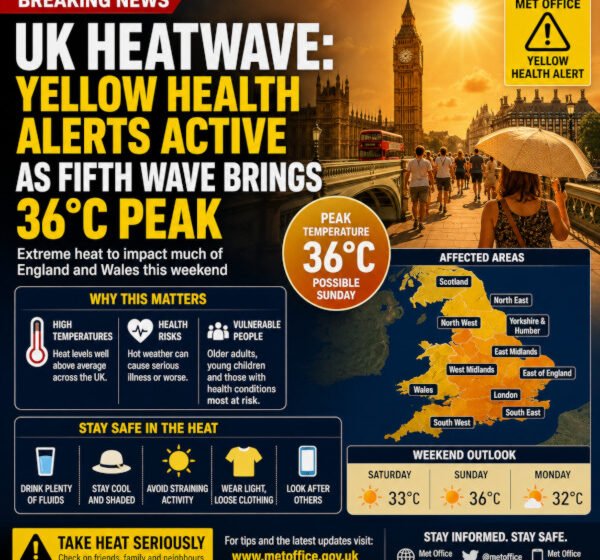
UK Heatwave forecast: Yellow Health Alerts Active as Fifth Wave Brings 36°C Peak

Climate UK: The latest UK heatwave forecast updates for August are here. The UK Health Security Agency (UKHSA) and the Met Office have issued yellow heat health alerts across most of England as Britain braces for its fifth official heatwave of the year. Active from 9:00 AM Saturday through 9:00 PM Tuesday, the alerts warn of potential health and social care impacts as temperatures climb toward 36°C (97°F).
UK Heatwave Forecast and Regional Timeline
High pressure moving across the UK will draw in warm southerly air, pushing temperatures well above average throughout the coming week. A distinct north-south split will leave Scotland and Northern Ireland cooler with intermittent rainfall, while England and Wales experience persistent sunshine and rising humidity.
| Date | Temperature Forecast | Affected Regions |
| Saturday, Aug 8 | Up to 30°C (86°F) | Central & Southern England, South Wales |
| Sunday, Aug 9 | Low-to-mid 30s°C | South East, London, East Midlands |
| Wednesday, Aug 12 | 32°C to 34°C | Most of England, Wales, and Southern Scotland |
| Thursday, Aug 13 | Peak 36°C (97°F) | East Anglia, South East England |
Key Environmental & Public Health Factors
-
Health Health Alerts: Yellow alerts cover London, South East, South West, East of England, East Midlands, West Midlands, and Yorkshire & the Humber.
-
Historic 30°C Threshold: The UK has recorded 33 days above 30°C so far this year. Reaching 30°C again next week will break the all-time record of 34 days set in 1995.
-
Water Restrictions: South West Water has enacted a hosepipe ban covering Devon, Cornwall, parts of Dorset, Somerset, and the Isles of Scilly due to low reservoir levels.
-
Impact on Health Services: Earlier heatwaves in May and June contributed to over 2,700 excess deaths, while July waves fueled widespread drought and wildfires across Suffolk and Wales.
Overnight temperatures are expected to remain uncomfortably warm, particularly in urban areas, increasing risk factors for vulnerable populations and elderly residents.
Frequently Asked Questions (FAQs)
Q: What is a Yellow Heat Health Alert?
A: Issued jointly by the UK Health Security Agency (UKHSA) and the Met Office, a Yellow Heat Health Alert indicates that hot weather is likely to impact health and social care services. While it may not drastically affect the broader healthy population, it poses an increased risk to vulnerable individuals, such as the elderly, young children, and those with underlying health conditions.
Q: Which areas are affected by the current alerts?
A: The yellow heat health alerts cover the vast majority of England. Affected regions include:
-
London
-
South East & South West England
-
East & West Midlands
-
East of England
-
Yorkshire and the Humber
Note: The North East and North West of England, alongside Scotland and Northern Ireland, remain under lower or no alert levels.
Q: How high will temperatures get and when will it peak?
A: Temperatures will steadily rise across the UK through the weekend and into next week:
-
Saturday–Sunday: Daytime highs reaching 29°C to 30°C on Saturday, climbing into the low 30s°C in southern England on Sunday.
-
Mid-Week (Wednesday–Thursday): Highs will climb to 32°C–34°C on Wednesday, before peaking at an expected 36°C (97°F) in parts of East Anglia and the South East on Thursday.
Q: Is this unusual for the UK weather season?
A: Yes. This spell marks the UK’s fifth official heatwave of the summer season. With over 33 days recording temperatures exceeding 30°C across the country so far this year, the UK is on track to break the all-time record of 34 days set back in 1995.
Q: What steps should I take to stay safe in extreme heat?
A: Public health officials recommend taking the following practical precautions:
-
Stay Hydrated: Drink plenty of water throughout the day and avoid excessive alcohol or highly sugary drinks.
-
Avoid Peak Sun: Limit outdoor activity and direct exposure between 11:00 AM and 3:00 PM when UV levels are highest.
-
Keep Living Spaces Cool: Close curtains or blinds in rooms that face the sun during the day to block heat out.
-
Check on Others: Keep an eye on elderly family members, neighbors, and people living with chronic health conditions who may struggle in the heat.
-
Never Leave Pets or Children in Cars: Temperatures inside a stationary vehicle can reach dangerous levels within minutes.