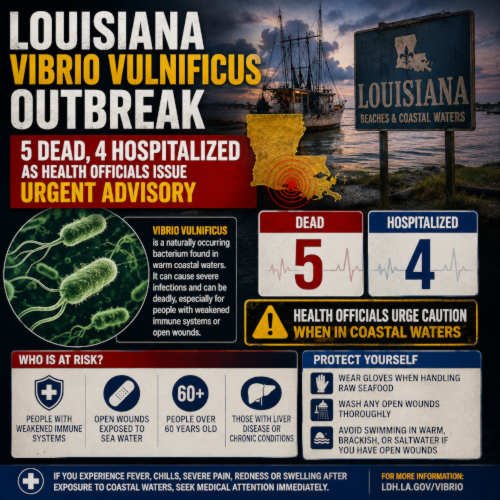
Louisiana Vibrio Vulnificus Outbreak: 5 Dead, 4 Hospitalized as Health Officials Issue Urgent Advisory

Los Angeles News Now: A blog on Vibrio vulnificus outbreak. Health authorities in Louisiana have issued an urgent public health warning following a spike in severe Vibrio vulnificus infections—commonly referred to as “flesh-eating bacteria”. According to the Louisiana Department of Health (LDH), nine residents have been hospitalised with the rare waterborne infection so far this year, resulting in five deaths.
The recent fatalities mark a significant increase compared to historical data. Over the past decade, Louisiana recorded an annual average of seven cases and one fatality during the same period.
What Caused the Louisiana Vibrio Vulnificus Outbreak?
State epidemiologists confirmed that all nine patients in this year’s outbreak contracted the infection when open wounds were exposed to warm seawater or brackish coastal waters. In addition, health officials noted that every individual had pre-existing underlying health conditions, making them particularly susceptible to life-threatening complications.
Vibrio vulnificus is a naturally occurring bacterium found in warm, shallow ocean water and estuaries where saltwater mixes with freshwater. According to guidance from the U.S. Centers for Disease Control and Prevention (CDC), bacterial concentrations peak between May and October when water temperatures rise.
While Vibrio infections remain relatively rare, Vibrio vulnificus is the most severe strain. The CDC estimates that roughly 1 in 5 people infected with Vibrio vulnificus die, frequently within 24 to 48 hours of symptoms appearing.
High-Risk Groups and Infection Pathways
Understanding how the bacteria spreads is essential for anyone living near or visiting coastal areas.
Primary Infection Routes:
-
Wound Exposure: Entering saltwater, brackish water, or floodwaters with fresh cuts, scrapes, surgical incisions, recent tattoos, or insect bites.
-
Raw Seafood Consumption: Eating raw or undercooked shellfish, particularly oysters harvested from warm coastal waters.
Who Is Most at Risk?
Although anyone can contract a Vibrio infection, severe and fatal outcomes primarily affect individuals with underlying health conditions, including:
-
Chronic liver disease, hepatitis, or cirrhosis
-
Diabetes
-
Cancer or ongoing chemotherapy
-
Immune-suppressing conditions or medications
-
Kidney disease
Symptoms: Recognizing the Warning Signs
Early diagnosis is critical. Vibrio vulnificus can trigger necrotizing fasciitis—a severe condition where the tissue surrounding an infected wound rapidly dies—or progress into septicemia (blood poisoning).
| Localized Wound Symptoms | Systemic & Bloodstream Symptoms |
| • Rapidly spreading redness | • High fever and sudden chills |
| • Severe pain and swelling | • Dangerously low blood pressure (shock) |
| • Skin warmth/discoloration | • Blistering skin lesions |
| • Discharge or fluid pus | • Nausea, vomiting, abdominal cramping |
🛡️ Health & Emergency Insurance Tips for Vibrio Outbreaks
Treating a severe Vibrio vulnificus infection involves intensive medical care, often including ICU hospitalization, intravenous antibiotics, surgical tissue removal (debridement), or even limb amputation. Medical bills can escalate rapidly. Here is how to ensure your health insurance covers emergency treatment:
1. Know Your Emergency Room Coverage
Emergency treatment for life-threatening bacterial infections is considered an essential health benefit under major insurance plans. If you show symptoms after coastal water exposure, go to the nearest ER immediately—most plans cover out-of-network emergency room visits without requiring pre-authorization.
2. Verify Surgical & Inpatient Hospitalization Benefits
Vibrio treatments frequently require surgical procedures to clear infected tissue. Check that your policy includes comprehensive inpatient surgical coverage, ICU care, and pre- and post-hospitalization benefits to handle follow-up wound care.
3. Keep Detailed Medical & Exposure Records
When seeking care, explicitly inform emergency staff if your symptoms followed seawater contact or raw seafood consumption. Proper initial diagnostic documentation (Vibrio wound culture or bloodstream infection coding) ensures smoother insurance claim approvals.
4. Travel Insurance for Coastal Vacationers
If traveling to coastal states like Louisiana or Florida, verify that your travel insurance policy includes Emergency Medical Evacuation and Emergency Medical Coverage to cover out-of-state hospitalizations or emergency transfers.
Prevention: How to Stay Safe at the Coast
Health officials recommend taking immediate precautions when spending time near coastal waters or handling raw seafood:
-
Keep Wounds Away From Seawater: Do not enter saltwater or brackish water if you have fresh cuts, scratches, or open wounds.
-
Cover Cuts: Protect minor skin breaks with waterproof bandages if water contact is unavoidable.
-
Wash Thoroughly: Clean wounds immediately with soap and clean tap water if they come into contact with coastal water or raw seafood drippings.
-
Cook Shellfish Completely: Avoid eating raw or undercooked oysters and shellfish.
-
Prevent Cross-Contamination: Keep cooked seafood separate from raw catches and juices.
When to Seek Immediate Medical Help
If you or a loved one experience fever, wound discoloration, or severe pain after swimming in saltwater or handling raw shellfish, seek emergency medical care immediately. Always inform your healthcare provider about recent seawater exposure so they can begin targeted antibiotic treatment right away.
Related Resources & Links
-
Official State Announcement: Read the Louisiana Department of Health Public Advisory.
-
National Health Guidance: Visit the CDC Vibrio Prevention Guide.
-
Internal Coverage: Explore our Health & Safety Advisory Hub, check local Coastal Water & Weather Alerts, or read our Public Health Emergency Updates.
What are your thoughts on staying safe during warm-water beach season? Have you or your family ever dealt with waterborne health warnings? Drop a comment below and share this update to keep coastal visitors informed! 💬👇