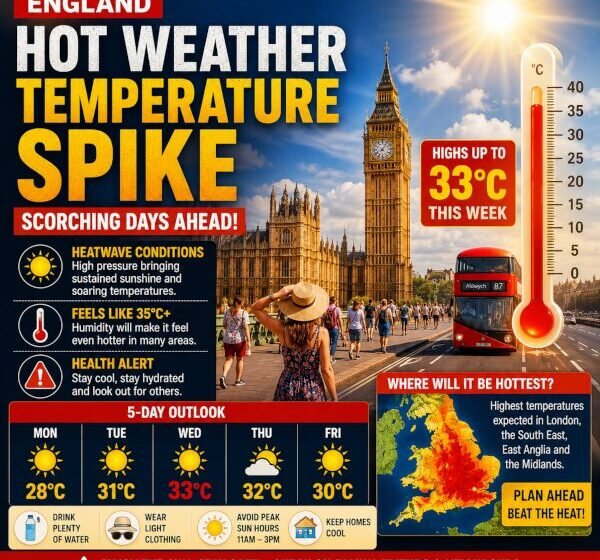
England Hot Weather Temperature Spike: 35°C Heatwave Triggers UK Amber Alerts as Nation Outpaces Santorini

Large swathes of England are bracing for extreme summer weather this week as temperatures peak at a blistering 35°C, outstripping popular Mediterranean holiday hotspots like Santorini, Mykonos, and Rhodes.
The sudden surge in temperatures has prompted health authorities to issue urgent warnings, with Amber Heat-Health Alerts taking effect across multiple regions as hospitals prepare for a wave of heat-related admissions.
Hotter Than the Aegean: The Heatwave Breakdown
According to the Met Office, the South East of England will bear the brunt of the heat surge on Monday, with local weather stations expected to hit 34°C to 35°C. Across central, eastern, and southern regions, widespread temperatures in the upper 20s and low 30s will make Britain noticeably warmer than traditional Aegean destinations.
While holidaymakers heading to the Greek islands can expect comfortable low-30s conditions tempered by sea breezes, UK residents face oppressive humidity coupled with minimal cooling relief overnight.
“Monday is expected to be the peak of the hot weather this week, with a potential for local 35°C readings in the South East, and the Midlands pushing into the low 30s,” forecasters noted.
Urban centers, including Greater London, are bracing for potential “tropical nights,” where temperatures refuse to dip below 20°C after dark. In densely built environments, tarmac and concrete absorb heat during the day and radiate it back out overnight, making indoor living spaces uncomfortably hot and hindering the body’s natural ability to recover.
Health Authorities Sound the Alarm: Amber Alerts Activated
In response to the rapid rise in temperatures, the UK Health Security Agency (UKHSA) has activated Amber Heat-Health Alerts:
-
Amber Regions: London, the South East, East of England, and the East Midlands.
-
Duration: In force from Monday morning through 9:00 AM on Wednesday.
-
Yellow Regions: Yellow alerts cover the North West, Yorkshire and The Humber, West Midlands, and the South West.
               [ 2026 UK HEAT-HEALTH ALERT REGIONS ]

       +--------------------+--------------------------------+
       | Alert Level        | Regions Covered                |
       +--------------------+--------------------------------+
       | AMBER              | • London                       |
       | (Significant Risk) | • South East                   |
       |                    | • East of England              |
       |                    | • East Midlands                |
       +--------------------+--------------------------------+
       | YELLOW             | • West Midlands                |
       | (Moderate Risk)    | • South West                   |
       |                    | • Yorkshire & The Humber       |
       |                    | • North West                   |
       +--------------------+--------------------------------+
An Amber alert signifies that weather conditions are likely to have direct, significant impacts across the entire health and social care sector. Under these conditions, heat-related illness is no longer confined solely to high-risk individuals; even healthier populations can experience heat distress, dehydration, and exhaustion.
Polly Ashmore, speaking on behalf of the UKHSA, stressed the importance of community vigilance:
“Periods of hot weather can result in serious health outcomes, especially for older adults, and it is therefore important that everyone takes sensible precautions while enjoying the sun. We are urging health and social care services in affected regions to ensure they are prepared, and reminding people to look out for elderly relatives, neighbours, and those with underlying conditions.”
NHS Under Pressure: Hospitals Prepare for Heat Surge
Emergency departments across the NHS are already preparing for an influx of patients suffering from heatstroke, severe dehydration, and cardiovascular strain brought on by the extreme weather.
Medical professionals warn that prolonged heat exposure puts substantial strain on the body’s circulatory system. As the body attempts to cool itself by dilating blood vessels near the skin, blood pressure drops and the heart must work significantly harder to maintain circulation.
Heightened Risks for Vulnerable Groups
Charities and medical organisations have issued targeted warnings for specific vulnerable groups:
-
Older Adults & Infants: Reduced thermoregulatory efficiency makes it harder for the body to manage internal temperatures.
-
Individuals with Cognitive Conditions: High temperatures pose severe risks for individuals living with conditions like dementia, who may not always recognise when they need a drink or wear suitable clothing, increasing the risk of dehydration and heat-related illness.
-
Care Facilities: Internal temperatures in care homes and hospitals risk exceeding critical clinical thresholds, complicating the administration and storage of key temperature-sensitive medications.
Parched Landscapes and Flash Drought Concerns
The intense August weather comes on the heels of several dry spells, leaving parks and green spaces across southern and eastern England visibly scorched. Famous urban parks—such as Blackheath and Kensington Gardens in London—present vast expanses of parched, yellowed grass.
┌────────────────────────────────────────────────────────────────────────┐
│                        PRIMARY RISKS & IMPACTS                         │
├───────────────────────────────────┬────────────────────────────────────┤
│ 🏥 Health & NHS                   │ 🌾 Environment & Wildlife          │
│ • NHS operational strain          │ • Flash drought condition in East  │
│ • Medicine storage overheating    │ • High risk of open-land wildfires │
│ • Heatstroke & dehydration surges │ • Water supply & reservoir drop    │
├───────────────────────────────────┼────────────────────────────────────┤
│ 💼 Workplace & Infrastructure     │ 🌊 Public Safety Risks             │
│ • Transport delays & rail buckling│ • Drowning from cold-water shock   │
│ • Calls for safe temperature limits│ • Sudden severe thunder risk      │
└───────────────────────────────────┴────────────────────────────────────┤
Environmental experts have warned that parts of the country are experiencing “flash drought” conditions, where high temperatures combined with dry winds rapidly strip soil moisture. This dry landscape elevates the risk of wildfire outbreaks in open spaces, heathlands, and agricultural fields, putting local fire and rescue services on high alert.
Outdoor Safety, Workplaces, and Travel Disruptions
As millions seek ways to keep cool, emergency services are issuing urgent safety warnings regarding rivers, lakes, and coastal waters.
The Danger of Cold-Water Shock
Despite scorching air temperatures, open water bodies across the UK remain surprisingly cold. Entering open water rapidly can trigger cold-water shock—an involuntary gasp reflex followed by rapid breathing and muscle loss—which can cause drowning even in competent swimmers. Authorities urge the public to stick to lifeguarded venues and avoid swimming in unmonitored open waters.
Workplace Temperature Debate
The intense heat has reignited debates over workplace safety laws in the UK. Unlike minimum workplace temperature guidelines, UK law currently does not set a maximum legal limit for workplace temperatures. Trade unions and worker safety advocates are renewing calls for formal legislation to protect outdoor labourers, warehouse staff, and office workers operating in un-air-conditioned buildings.
Infrastructure & Transport Delays
Network Rail and public transport operators have warned that extreme heat can cause rail lines to expand and potentially buckle. Speed restrictions may be introduced during peak afternoon hours across affected routes, leading to potential delays and travel disruptions.
Weather conditions of Rain and Easing Temperatures
The Met Office forecasts that while Monday represents the absolute peak of the current heatwave, warm conditions will persist into Tuesday before a gradual breakdown begins.
-
Tuesday: Temperatures in the South East and East Anglia will remain high, hovering between 28°C and 30°C.
-
Wednesday Onward: A low-pressure system moving in from the Atlantic is expected to bring increased cloud cover, fresher air, and cooler conditions.
-
Rain Forecast: Northern and western regions—including parts of Scotland, Wales, and Northern Ireland—are likely to see heavier rainfall and cooler mid-20s temperatures, with some localised showers potentially edging into southern and eastern England.
How to Precautions for Staying Safe in High Heat
To protect yourself and your family during peak heatwave conditions, health experts advise adopting these essential daily practices:
-
Stay Hydrated: Drink plenty of fluids throughout the day, prioritizing water and avoiding excessive alcohol or caffeine.
-
Avoid Direct Peak Sun: Limit outdoor activity during the hottest part of the day, between 11:00 AM and 3:00 PM.
-
Keep Living Spaces Cool: Close blinds, curtains, and windows on sunny side exposures during the day to block solar heat; open windows at night once outdoor temperatures drop.
-
Check on Neighbors: Regularly check in on elderly family members, neighbors, and individuals living alone or with chronic conditions.
-
Never Leave Pets or Children in Parked Vehicles: Internal temperatures inside parked cars can reach fatal levels in minutes, even with windows cracked open.