UK TRAVEL ALERT: FLIGHT CHAOS AS MIDDLE EAST CONFLICT TRIGGERS AIRLINE CANCELLATIONS, FUEL SHORTAGES, AND SURGING FARES
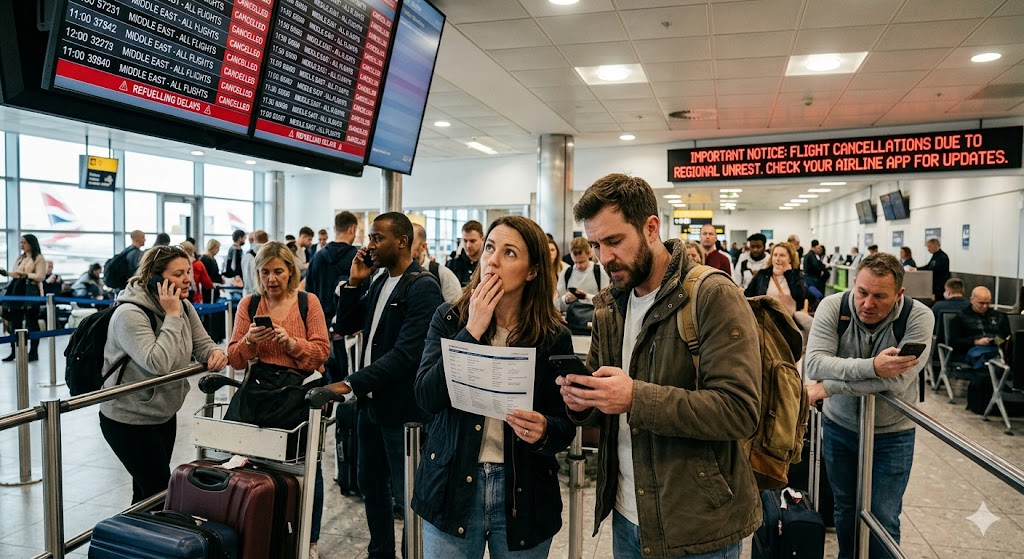
LONDON — British travelers are facing a “perfect storm” of travel disruption as the escalating conflict in the Middle East forces major airlines to slash UK flight schedules and hike ticket prices to record levels. With the critical Strait of Hormuz effectively closed to shipping since March, a looming jet fuel shortage is threatening to turn summer holiday plans into a logistical nightmare.
From long-haul routes to Asia seeing price hikes of over 500% to “data taxes” on legacy bookings, the landscape of UK aviation has shifted overnight. Here is the definitive breakdown of the airlines cutting service, why your ticket is getting more expensive, and your legal rights if you are left stranded.
Which Airlines Are Grounding Flights?
While the majority of UK flights are still operating, a growing list of international carriers has begun “capacity trimming”—canceling flights on routes with multiple daily frequencies to consolidate passengers and conserve fuel.
Airlines Cutting UK Schedules:
- KLM & Air France: The group has reduced frequencies from regional UK hubs to Paris and Amsterdam.
- Lufthansa: Significant reductions in flights connecting London, Manchester, and Birmingham to Frankfurt and Munich.
- Delta & Air Canada: North American carriers are thinning schedules to prioritize high-yield routes as fuel costs bite.
- Asiana Airlines & SAS: Strategic cuts have been announced for the late spring and early summer periods.
Airlines Maintaining Current Schedules:
- IAG (British Airways & Iberia): Currently sticking to planned timetables but warned of “dynamic pricing” adjustments.
- EasyJet & Jet2: Budget carriers have signaled they intend to fly their full summer schedules, though they remain “vigilant” regarding fuel supplies.
The “Hormuz Squeeze”: Why Prices Are Skyrolling
The primary engine of this crisis is the Strait of Hormuz, a vital artery for global oil and jet fuel. Since its effective closure in early March 2026, the price of jet fuel has roughly doubled, hitting a peak of $205 per barrel in early April.
“We are not physically out of fuel yet,” says Rory Boland, travel editor at Which?. “But the industry is running on fumes in terms of storage. If stable supply doesn’t resume within three weeks, mass cancellations will become inevitable.”
The Cost of “Going Long”
Long-haul flights to Asia and Australia have been the hardest hit. To avoid closed Middle Eastern airspace, flights are being rerouted north via the Caucasus or south via Africa. This adds hours to journey times and tons to fuel consumption.
Example Price Surges (London Departures):
| Destination | June 2025 Price | June 2026 Price | % Increase |
|---|---|---|---|
| Hong Kong | £650 | £3,318 | 410% |
| Melbourne | £1,100 | £1,936 | 76% |
| Bangkok | £580 | £2,265 | 290% |
The “Hidden” Charges: Can Airlines Raise Your Price Post-Booking?
A major point of contention for UK travelers is whether an airline can ask for more money after you’ve already paid for your ticket.
- Standard Airfare: Generally, once a ticket is issued, the price is locked. However, regional Spanish carrier Volotea has recently faced legal challenges for attempting to add “fuel surcharges” to existing bookings.
- Package Holidays: Under UK law, tour operators can increase the price of a package holiday by up to 8% after booking if there is a “significant rise in fuel costs.” If the increase exceeds 8%, you have the right to cancel with a full refund.
- New Fees: Carriers including Virgin Atlantic, Turkish Airlines, and Thai Airways have already increased fees for checked luggage and seat selection to offset fuel spikes.
Know Your Rights: The UK 261 Safety Net
If your flight is cancelled, you are protected under UK 261 regulations, regardless of the geopolitical cause.
- The Choice: The airline must offer you a choice between a full refund or an alternative flight to your destination at the earliest opportunity.
- Duty of Care: If you are stranded, the airline must provide food vouchers, communication (phone calls), and hotel accommodation if an overnight stay is required.
- The Compensation Catch: While you are entitled to care and a new flight, you likely won’t receive “fixed-sum compensation” (the £220-£520 payouts). The Middle East conflict is classified as an “extraordinary circumstance,” meaning the cancellation is technically outside the airline’s control.
Expert Advice: Should You Book Now?
Travel experts are divided. “If you see a price you can afford for August, lock it in now,” advises independent commentator Jane Hawkes. “Airlines use ‘hedging’ to buy fuel in advance, but those cheaper reserves are running out. Prices in May and June are expected to climb even higher.”
Top Tips for UK Travelers:
- Use a Credit Card: Bookings over £100 are protected under Section 75 of the Consumer Credit Act, giving you an extra layer of protection if an airline goes bust.
- Check Your Insurance: Ensure your policy covers “scheduled airline failure” and “disruption due to conflict.”
- Fly Direct (If Possible): Connecting flights through Gulf hubs (Dubai, Doha, Abu Dhabi) carry the highest risk of disruption or rerouting delays.
What to do if your flight is cancelled: Do not leave the airport without a written statement from the airline outlining your rights. If the airline fails to provide a hotel, keep all receipts for “reasonable” expenses—you are legally entitled to claim these back.
This is a breaking news report. Stay tuned to Gemini News for live updates on airspace closures and airline schedule changes.